

As one of the largest industrial and logistics markets in the southern United States, Houston serves as a critical junction for manufacturing, petrochemical support, consumer goods, and international trade. Moving freight efficiently through the Greater Houston area requires an understanding of the region’s expansive highway loops, major distribution corridors, and heavy traffic bottlenecks.
For supply chain managers, manufacturers, and freight brokers, securing dependable dry van capacity in Houston is essential to keeping regional assembly lines supplied and retail shelves stocked. Matching cargo characteristics with the right transportation schedules helps businesses reduce dwell times, control transportation spend, and maintain delivery reliability across Texas and interstate lanes.
The Strategic Importance of the Houston Freight Corridor
Houston’s transportation network connects ocean shipping via the Gulf Coast, rail interchanges, and primary interstate highways. Key arterial routes shape how regional truckloads move through the market:
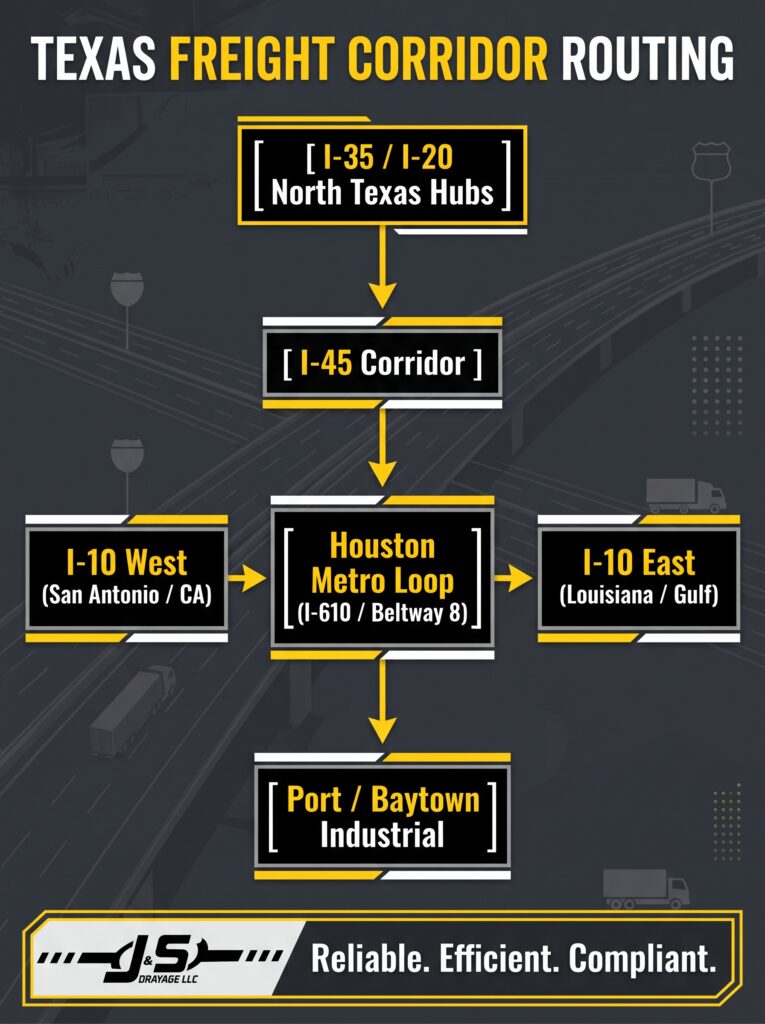
- Interstate 45 (I-45): The primary north-south artery connecting Houston directly to the Dallas-Fort Worth metroplex, making it one of the heaviest dry van lanes in the state.
- Interstate 10 (I-10): The east-west corridor facilitating long-haul freight movement from Southern California, West Texas, and the Southwestern U.S. through Houston toward Southern and Eastern states.
- Interstate 69 / US-59: A vital route for trade moving north from the Texas-Mexico border into Houston’s distribution centers.
- Beltway 8 & Grand Parkway (SH 99): Outer loops essential for bypassing core city congestion when staging regional deliveries between suburban industrial parks in Baytown, Deer Park, Sugar Land, and North Houston.
Common Challenges in Houston Regional Trucking
Managing regional truckload freight within the Houston area presents operational variables that can impact transit schedules if not planned carefully:
Congestion and Peak-Hour Delays
Houston consistently ranks among the top metropolitan areas for highway traffic density. Peak congestion windows along I-45, I-10, and the I-610 loop significantly increase transit times. Carriers operating in this market must plan dispatch schedules around rush-hour windows to avoid driver detention and missed receiver appointments.
Staging and Drop-and-Hook Dynamics
High-volume manufacturing facilities and distribution hubs in East Houston often require staged drop-and-hook operations rather than live loading. Securing dry van providers with available equipment and flexible trailer pools allows shippers to maintain continuous dock operations without tying up power units.
Stricter Delivery Windows
Retail distribution hubs and manufacturing plants throughout Texas increasingly enforce tight delivery windows (RAD/MABD compliance). Minor highway delays can lead to refused shipments or chargebacks. Working with carriers experienced in regional routing helps mitigate these operational risks.
Matching Cargo Types to Dry Van Trailers
Standard 53-foot dry van trailers provide the most versatile and weather-protected capacity for non-perishable freight across Texas. Understanding which freight profiles fit dry van shipping ensures optimal space utilization and weight distribution.
| Cargo Category | Typical Freight Examples | Key Handling Considerations |
| Consumer Packaged Goods (CPG) | Paper products, packaged food, household goods | High volume/cube utilization; floor-loaded or palletized |
| Manufacturing & Industrial Materials | Automotive components, plastics, rubber, non-hazardous liquids | Heavy payload management; requires secure tie-downs and weight balancing |
| Retail & Bulk Merchandise | Electronics, apparel, dry groceries | Strict delivery windows; drop-and-hook compatibility |
| Construction & Building Supplies | Hardware, dry chemicals, packaged raw materials | Palletized floor loading; protection from weather elements |
For a complete breakdown of cargo compatibility, review our guide on what freight types fit dry van service.
Inter-Market Freight Movements: California, Dallas, and Houston
Many supply chains operating in Texas do not function in isolation. Importing goods through California ports or staging rail intermodal containers in North Texas often requires downstream dry van transportation into Houston.
Connecting West Coast Imports to Texas Markets
Shippers importing goods through West Coast ocean gateways—such as the Port of Oakland—frequently transload ocean containers into 53-foot dry van trailers at a secure California warehouse facility before moving full truckloads east toward Texas. Transloading increases cubic capacity per load and protects against ocean container detention fees.
Dallas to Houston Regional Lanes
The 240-mile transit between Dallas rail terminals and Houston industrial hubs is one of the most active freight corridors in Texas. Utilizing dependable dry van transportation services in Texas ensures seamless drayage transfers from rail ramps to final distribution sites across the state.
Best Practices for Selecting a Dry Van Carrier in Houston
When evaluating dryvan trucking companies in Houston and across Texas, logistics decision-makers should consider the following factors:
- Equipment Reliability and Maintenance: Verify that the carrier maintains clean, weather-tight 53-foot trailers equipped with proper tracking technology to provide shipment visibility.
- Local and Regional Route Expertise: Drivers familiar with Houston’s industrial park layouts, port-adjacent roads, and scale locations navigate congestion more efficiently.
- Communication and Responsiveness: Choose a carrier with a proactive dispatch team that provides real-time updates when unexpected traffic delays or receiver hold-ups occur.
- Integrated Service Capabilities: Partnering with a logistics provider capable of handling port drayage, rail freight transfers, and dry van trucking simplifies vendor management across multi-state supply chains.
At J&S Drayage, we provide dedicated dry van transportation services designed to keep your Texas and interstate lanes moving. Whether you require regional runs between Houston and Dallas or long-haul capacity connecting California and Texas, our team delivers the professional, responsive service your business demands.