

High-value commodities such as commercial electronics, circuit components, industrial machinery, and precision tools carry financial risk during transport. Strategic freight corridors like Interstate 10, Interstate 45, and the highway loops surrounding Greater Houston experience heavy freight volumes daily. For logistics directors and freight brokers, shipping sensitive freight through these high-density markets requires more than standard capacity; it demands strict, end-to-end security protocols.
Cargo theft, pilferage, and unauthorized trailer entry during long-haul transit occur primarily during unattended layovers or unmonitored staging. Dedicated dry van transportation provides a physical line of defense, but true risk mitigation relies on standardized operational discipline, real-time tracking technology, and documented chain-of-custody procedures.
The Core Risk Factors Facing High-Value Cargo on Texas Corridors
Understanding where freight vulnerabilities exist helps shippers evaluate carrier safety measures before tendering high-value loads. Cargo transit across Texas involves specific operational challenges:
- Unmonitored Highway Staging: Freight sitting idle in unlit rest areas or unmonitored truck stops along long-haul Texas lanes presents the highest risk for unauthorized access.
- Seal Tampering during Multi-Stop Loads: Every unnecessary door opening increases the risk of inventory discrepancies or seal replacement fraud.
- Transit Bottlenecks in Metro Hubs: Congestion on Houston’s I-610 loop, Beltway 8, or port-adjacent access roads can force unexpected driver dwell time near heavy traffic centers.
Essential Cargo Security Protocols for Dry Van Transportation
To safeguard high-value electronics and industrial machinery, professional carriers implement structured operational layers across every mile of transit.
High-Security Bolt Seals and Driver Seal Procedures
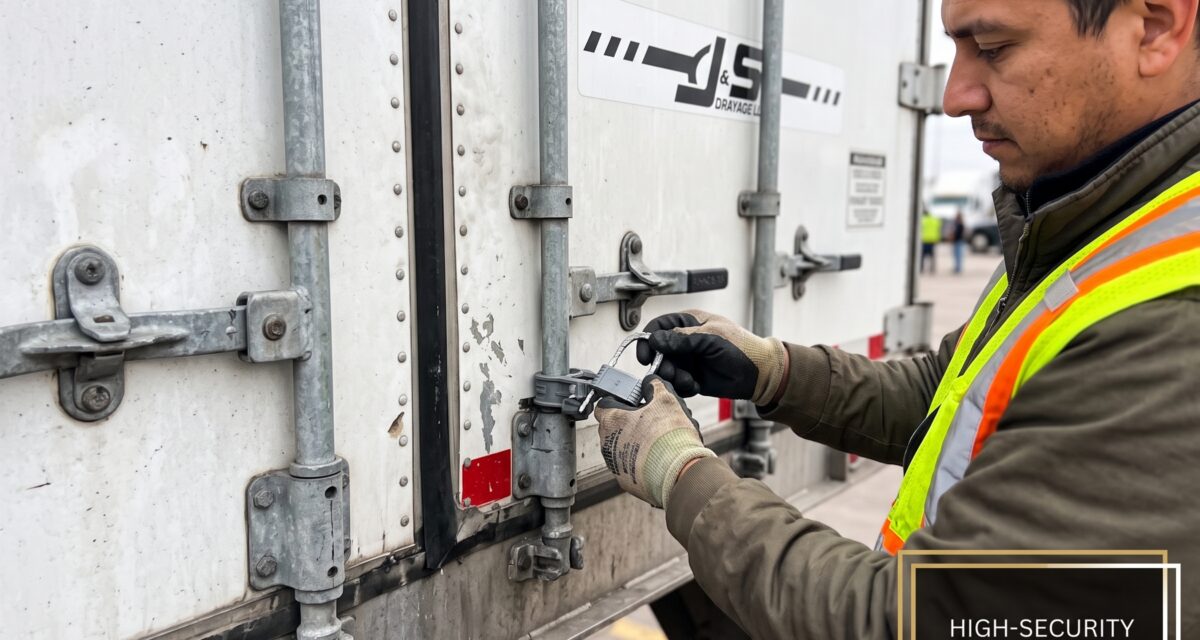
A physical lock is only as effective as the logging protocol behind it. Standard plastic indicative seals are easily compromised; high-value cargo requires ISO 17712-compliant high-security bolt seals.
Strict driver seal procedures must follow a clear sequence:
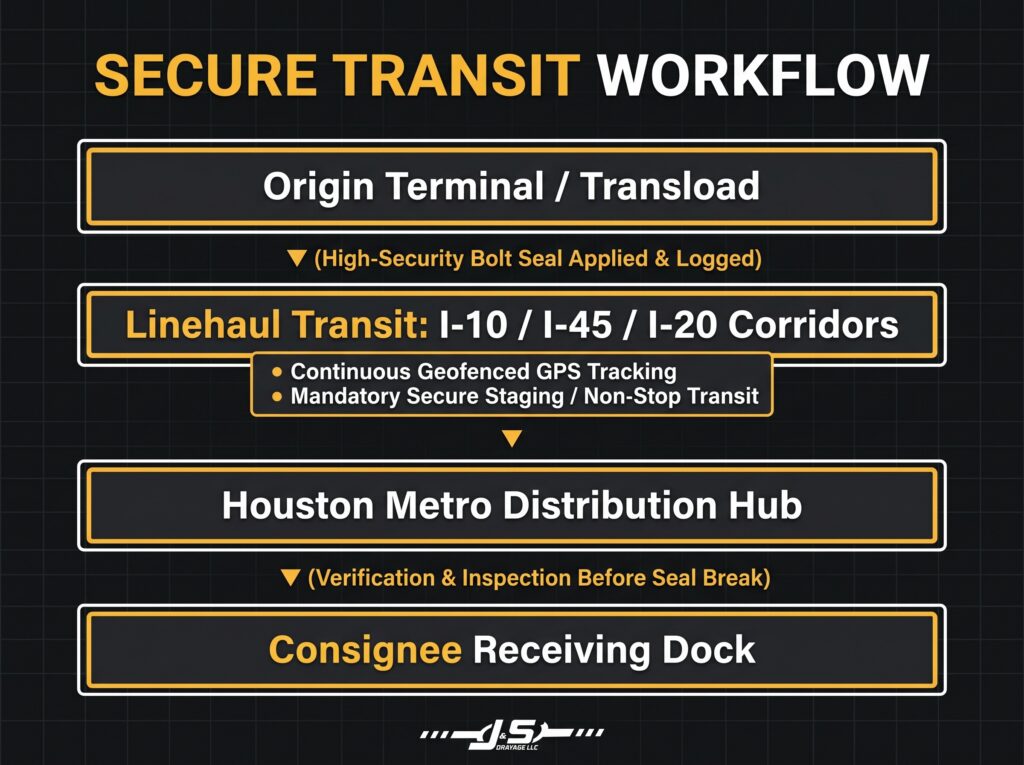
- Application at Loading: The driver inspects the trailer interior for structural integrity, watches the final door closure, applies the ISO 17712 bolt seal, and records the unique seal number directly on the Bill of Lading (BOL).
- Mid-Route Inspections: Drivers perform visual and physical seal checks at every mandatory rest stop, verifying that the lock body and locking pin show no signs of tampering or tool marks.
- Consignee Verification: The receiving dock clerk must inspect and match the physical seal number against the BOL documentation before cutting the seal. If a discrepancy exists, the seal remains intact until dispatch and risk managers clear the load.
Real-Time GPS Tracking Capabilities and Geofencing
Modern dry van fleets utilize dual-layer telematics to maintain complete visibility over power units and trailing equipment:
- Tractor Telematics: Provides continuous position updates, driver hours-of-service (HOS) monitoring, and speed tracking.
- Trailer-Mounted GPS: Independent battery-backed GPS units mounted on the dry van trailer allow dispatch teams to monitor the cargo container even if unhooked from the power unit.
- Geofenced Route Monitoring: Route parameters are programmed prior to departure. If a vehicle deviates from its assigned long-haul lane or stops in an unauthorized zone along I-10 or I-45, automated alerts notify dispatch teams immediately.
Evaluating Dry Van Equipment for Sensitive Cargo
Beyond electronic tracking and physical seals, the structural condition of the dry van trailer itself plays a role in cargo protection.
| Equipment Requirement | Operational Standard | Threat / Risk Mitigated |
| ISO 17712 Bolt Seals | Heavy-duty steel pin lock rated for high-impact resistance | Unauthorized door opening & pilferage |
| Solid-Wall 53′ Dry Vans | Clean, leak-free interior, reinforced locking bars | Environmental damage, water ingress, forced entry |
| Trailer GPS Telematics | Independent power source with real-time location pinging | Trailer break-away & unauthorized uncoupling |
| Interior E-Track Systems | Heavy-duty ratcheting straps & load bars | In-transit cargo shifts, pallet tipping, cosmetic damage |
Shippers moving specialized products or machinery should ensure their carrier utilizes clean 53-foot dry van equipment equipped with proper interior tie-down infrastructure. For further information on freight compatibility, review our guide on what freight types fit dry van service.
Integrating Secure Warehousing and Transloading
Long-haul security does not begin on the highway—it starts at the origin loading dock or staging yard. When importing electronics or component parts through West Coast ocean terminals like the Port of Oakland, staging cargo properly before long-haul transport to Texas is critical.
By utilizing a secure California warehouse facility near port terminals, importers can devan ocean containers, conduct piece-count inspections, and transload goods directly into 53-foot domestic dry vans. A secured staging yard—featuring perimeter fencing, controlled gate access, and 24/7 security cameras—prevents cargo exposure prior to highway dispatch.
Once on the road, utilizing experienced dryvan services in Houston ensures goods are delivered straight to regional manufacturing plants or distribution centers in Baytown, Pasadena, or North Houston without unnecessary intermediate handoffs.
Checklist: Questions Shippers Should Ask Their Carrier
Before tendering high-value loads on Texas corridors, ask potential transportation partners these questions:
- What specific driver seal procedures do you enforce at origin and destination?
- Are your dry van trailers equipped with independent GPS tracking units?
- What is your protocol if a driver encounters an unexpected route delay or traffic stoppage in high-density metro areas like Houston or Dallas?
- How do you manage secure trailer staging during mandatory driver rest periods?
- Can your fleet handle direct long-haul moves from West Coast origin hubs to Texas receivers without middle-lane rehandling?
At J&S Drayage, we understand that protecting your freight requires consistent execution. From secure staging at our 32,000 sq. ft. Livermore, CA warehouse facility to reliable dry van transportation across Texas and interstate lanes, our team delivers the responsive, professional service required to keep your supply chain secure.