

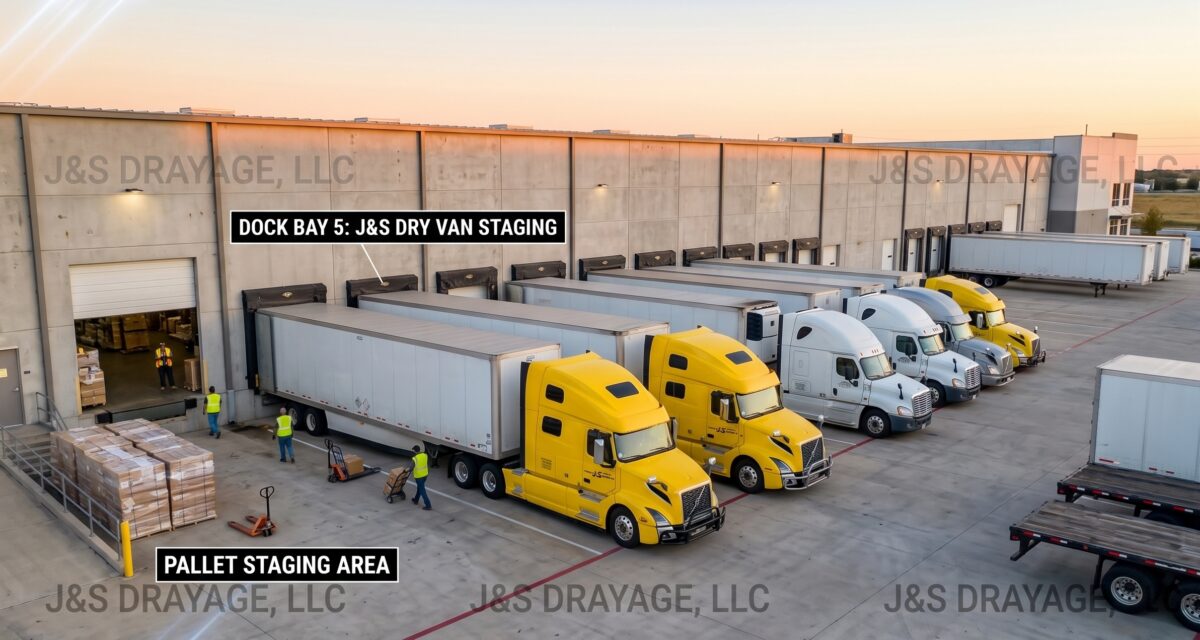
Dry van transportation remains the workhorse of North American surface logistics. According to freight movement data from the Bureau of Transportation Statistics (BTS), enclosed trailers carry the vast majority of non-perishable truckload freight across U.S. highways.
For logistics managers and freight brokers planning capacity along major freight corridors—such as the Dallas-Houston lane or interstate routes connecting West Coast ports—understanding commodity suitability, weight distribution, and trailer specifications is essential for efficient dock operations and damage-free transit.
What Is a Standard Dry Van Trailer?
A standard 53-foot dry van is a fully enclosed semi-trailer designed to protect non-temperature-sensitive cargo from road debris, weather, and theft. Unlike flatbeds or refrigerated units (reefers), dry vans rely entirely on ambient temperature control and physical securement.
Key Equipment Specifications
| Parameter | Standard 53-Foot Dry Van Dimensions |
| Length | 53 feet (636 inches) |
| Width | 102 inches (outer) / ~99 inches (usable interior) |
| Height | 110 inches (usable interior clearance) |
| Max Payload Weight | ~42,000 to 45,000 lbs (subject to tractor weight and axle balance) |
| Pallet Capacity | 26 standard floor pallets (48″ x 40″) non-stacked / up to 52 double-stacked |
To maintain legal gross vehicle weight ratings (GVWR) under Federal Highway Administration (FHWA) regulations, total vehicle weight must not exceed 80,000 lbs without special permitting.
Primary Freight Commodities Moved by Dry Van
Dry vans accept a broad spectrum of commercial commodities. Below are the primary cargo categories handled in daily regional trucking operations:
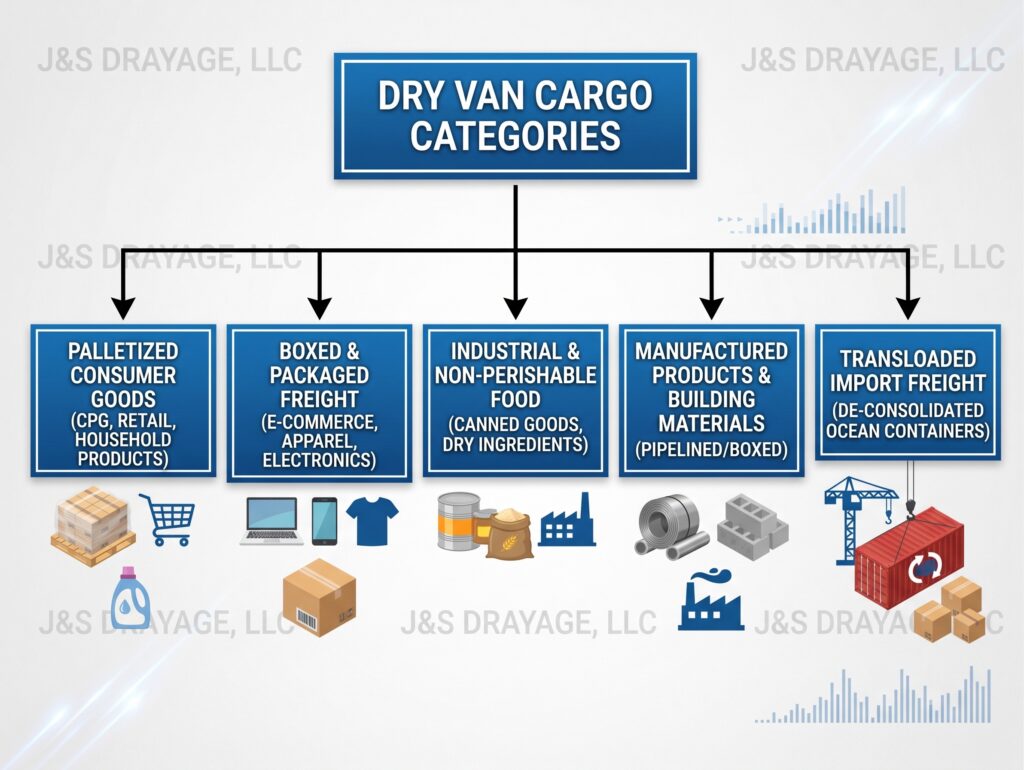
1. Palletized Consumer Packaged Goods (CPG) and Retail
Fast-moving consumer goods represent a significant portion of dry van traffic. Items are typically unitized on standard wood or plastic pallets, shrink-wrapped, and loaded by forklift.
Examples: Paper goods, personal care items, packaged cleaning products, and dry food items.
Operational Note: High-density CPG shipments often max out trailer weight limits before filling physical floor space (“weighing out”), requiring careful axle load calculations.
2. Non-Perishable Food and Beverage
Food products that do not require climate control move reliably in clean, dry van trailers.
Examples: Canned foods, dry pasta, bagged grains, spices, bottled beverages, and commercial kitchen supplies.
Operational Note: Shippers must ensure trailers are food-grade—free of odors, holes, water leaks, or chemical residue—to avoid load rejections at receiver docks.
3. Industrial Supplies, Electronics, and Manufacturing Materials
Raw materials and manufactured components routinely move between processing plants, assembly facilities, and regional warehouses.
Examples: Automotive parts, industrial hardware, consumer electronics, textiles, and crated machinery components.
Operational Note: Electronics and high-value cargo require sealed trailers and carrier chain-of-custody protocols during transit.
4. Transloaded Import Freight
Port drayage operations frequently intersect with dry van trucking. Imported goods arriving in 20-foot or 40-foot ocean containers at major hubs are routinely de-consolidated at regional warehouses and transloaded into 53-foot dry vans for domestic highway distribution.
Examples: Apparel, footwear, home goods, and seasonal consumer products.
Operational Note: Transloading 40ft container cargo into 53ft trailers reduces total long-haul movements, as three ocean containers typically fit into two standard dry van trailers.
Freight That Cannot (or Should Not) Move via Standard Dry Van
While versatile, dry vans are not suitable for every commodity type. Attempting to load incompatible cargo creates safety hazards, causes freight damage, or violates federal transportation laws.
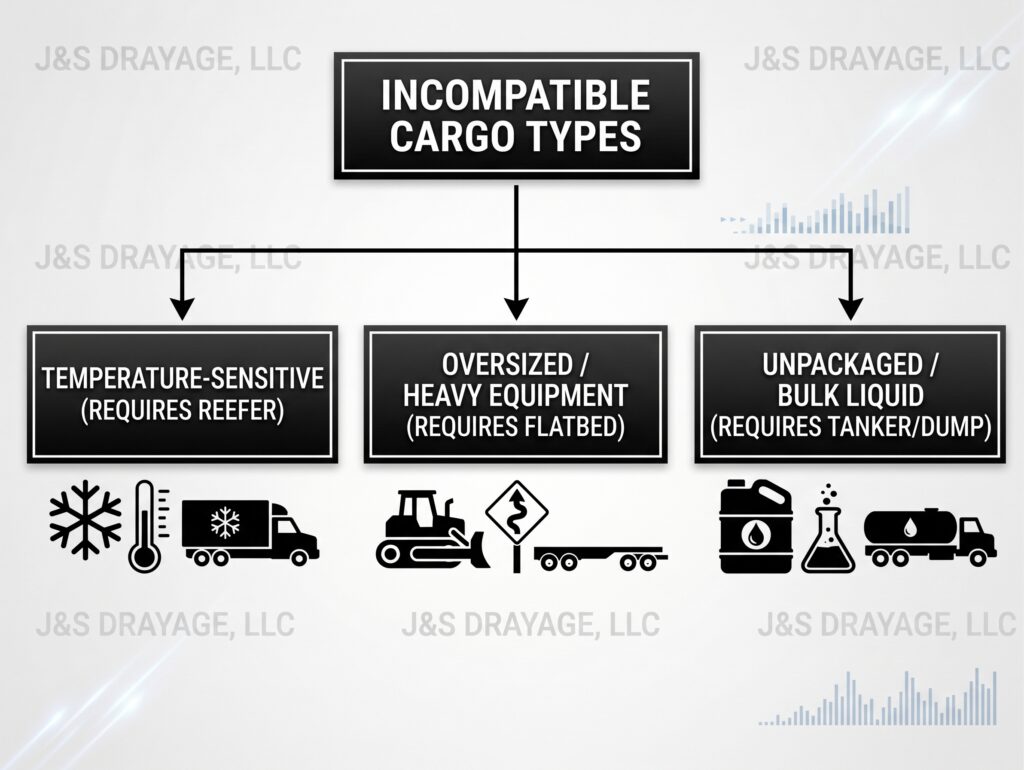
Temperature-Sensitive Goods: Fresh produce, frozen foods, meat, pharmaceuticals, and certain liquid chemicals require active temperature control and must ship in refrigerated trailers (reefers).
Overdimensional or Heavy Machinery: Structural steel, wide industrial equipment, and heavy machinery that cannot be loaded through rear trailer doors require open-deck flatbeds, step decks, or specialized heavy-haul equipment.
Unpackaged Bulk Commodities: Unpackaged agricultural grains, gravel, or bulk liquids require specialized hopper bottoms, dump trailers, or liquid tankers.
Operational Factors Affecting Dry Van Capacity and Delivery
Booking dry van capacity involves evaluating key operational variables before dispatching equipment:
Weighing Out vs. Cubing Out
Weighing Out: Occurs when dense freight (e.g., liquids, paper rolls, metals) hits maximum legal weight (~42,000–45,000 lbs payload) before filling the trailer’s interior volume.
Cubing Out: Occurs when lightweight, bulky freight (e.g., insulation, paper towels, empty packaging) fills the full 3,850 cubic feet of trailer space well before reaching weight limits.
Loading and Securement Protocols
Proper dunnage, load bars, straps, and friction mats prevent freight migration during transit. Sudden stops or tight turns can cause unsecured pallets to shift, leading to dangerous door-opening spills or rejected deliveries at customer distribution hubs.
Regional Corridor Demands
High-volume freight lanes—such as intra-state routes between Houston, Dallas-Fort Worth, and San Antonio—experience distinct seasonal capacity shifts. Aligning with carriers experienced in regional lane dynamics helps shippers maintain predictable scheduling during demand spikes.
Integrating Dry Van Transport with Regional Drayage & Warehousing
Maximizing supply chain efficiency requires seamless coordination between first-mile port or rail drayage, cross-dock warehousing, and final dry van highway delivery.
At J&S Drayage LLC, we support regional supply chains across key logistics hubs in California and Texas:
Texas Dry Van Transportation: Asset-backed dry van service covering core commercial corridors across Dallas, Houston, and surrounding regional markets. Learn more about our lane coverage on our Texas dry van service page.
Port and Rail Integration: Complete drayage support connecting ocean hubs like the Port of Oakland and Dallas intermodal rail facilities directly to domestic distribution channels. Read our operational breakdown on Texas supply chain trends and rail drayage strategies.
Flexible Warehousing Support: Secure storage and freight staging at our 32,000 sq. ft. facility in Livermore, California—located less than an hour from the Port of Oakland—ideal for cross-docking, transloading, and temporary holding.
Partnering with an experienced carrier ensures your freight is matched with the right equipment, properly secured, and delivered on schedule.