

The 240-mile stretch of Interstate 45 connecting Dallas-Fort Worth and Greater Houston represents one of the densest freight movements in the southern United States. Serving as an essential bridge between North Texas intermodal rail yards, central distribution centers, and Gulf Coast industrial facilities, this corridor moves millions of tons of consumer goods, manufacturing inputs, and imported materials annually.
For supply chain managers and freight brokers, managing the I-45 lane efficiently requires more than matching a truck to a load. Balancing transit reliability, fuel surcharges, and backhaul capacity dictates whether a lane runs profitably or suffers from budget overruns and missed delivery windows.
Corridor Profile: Anatomy of the I-45 Lane
Moving freight between Dallas and Houston is typically classified as a short-haul or regional daily turn. While the mileage is straightforward, operational dynamics change depending on the origin, destination, and departure time.
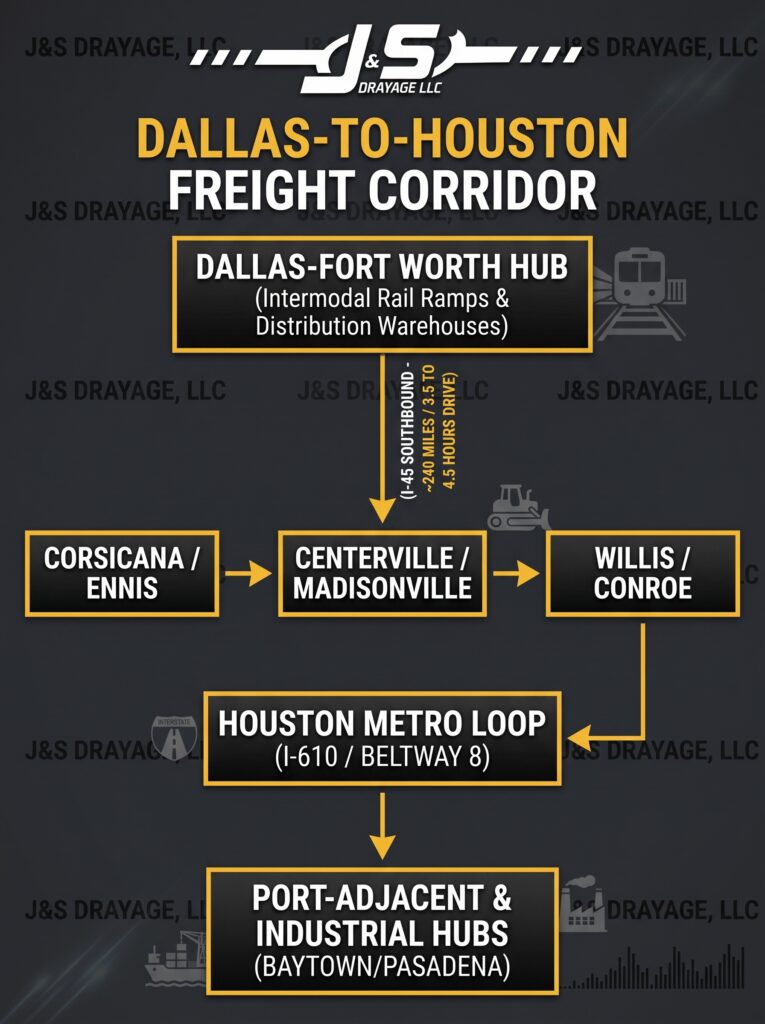
Key Transit Metrics
- Total Mileage: ~240 miles (origin to destination terminal dependent).
- Standard Drive Time: 3.5 to 4.5 hours under clear traffic conditions.
- Driver Hours of Service (HOS) Impact: A single driver can legally complete a one-way trip, unload, and potentially return within the Federal Motor Carrier Safety Administration (FMCSA) 11-hour driving limit, provided loading dock dwell times remain under control.
Operational Factors Affecting I-45 Transit Reliability
While I-45 offers a direct path between Texas’s two largest metropolitan areas, several variables routinely impact delivery schedules:
Metropolitan Bottlenecks
The greatest delays on this corridor do not occur on the open highway—they happen at the bookends of the route. Departing South Dallas or navigating the I-610 and Beltway 8 interchanges in Houston during morning (6:30 AM – 9:00 AM) or afternoon (4:00 PM – 6:30 PM) rush hours adds up to 90 minutes of dwell time.
Construction Zones and Highway Incidents
Heavy lane utilization by passenger vehicles and commercial trucks leads to frequent highway maintenance along rural stretches near Corsicana, Fairfield, and Huntsville. Accidents along two-lane stretches can temporarily halt southbound or northbound traffic with limited alternative rerouting options.
Receiving Dock Dwell Times
Because the lane distance is short, driver productivity hinges on fast turnaround at loading docks. Detention times exceeding two hours at either end consume the driver’s available HOS, turning an efficient same-day return into an overnight layover that increases linehaul costs.
Understanding Cost Drivers: Linehaul, Fuel Surcharges, and Backhauls
Optimizing transportation spend on the Dallas-to-Houston corridor requires analyzing the three components of full truckload pricing:
| Cost Component | Operational Impact | Optimization Strategy |
| Base Linehaul Rate | Standard rate per mile based on equipment availability and market demand. | Secure dedicated capacity rather than spot market booking to stabilize base costs. |
| Fuel Surcharge (FSC) | Variable fee tied directly to weekly U.S. Energy Information Administration (EIA) Gulf Coast diesel pricing. | Utilize fuel-efficient routing and minimize idle time during metro traffic navigation. |
| Backhaul Capacity | Rate balance influenced by directional freight volume discrepancies between Dallas and Houston. | Partner with carriers running balanced intra-Texas loops to avoid paying deadhead surcharges. |
Navigating Backhaul Discrepancies
Freight volumes between Dallas and Houston are not always equal. Dallas acts as a major inland distribution hub receiving domestic rail and long-haul freight, while Houston generates heavy outbound industrial, chemical, and port-related trade.
When southbound volume outpaces northbound demand (or vice versa), spot market rates fluctuate. Working with established dryvan services in Texas allows shippers to tap into consistent, contracted backhaul lanes, preventing artificial rate spikes caused by regional capacity imbalances.
Inter-Market Integration: California Ports to Texas Corridors
For many international supply chains, the Dallas-to-Houston lane is the final leg of a broader multi-state transit. Importers landing ocean containers at West Coast gateways like the Port of Oakland frequently transload freight into 53-foot dry van trailers to move goods economically across the Southwest.
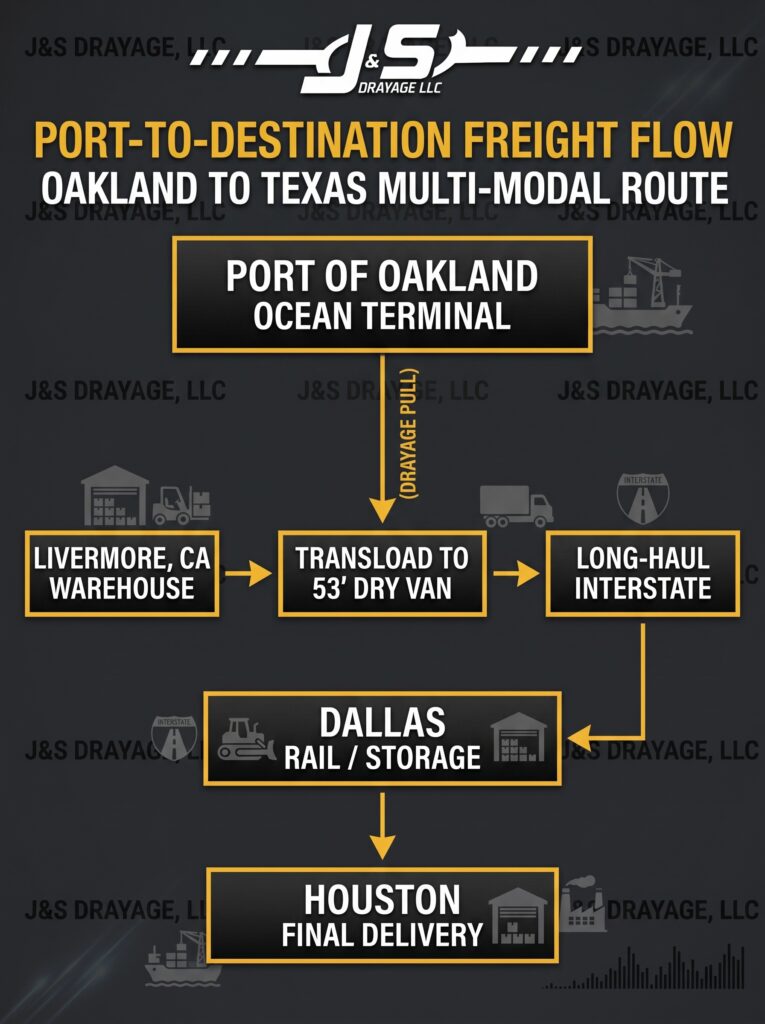
By staging imported freight at a secure California warehouse facility, shippers transload three 40-foot ocean containers into two 53-foot dry vans. Once the freight reaches Dallas rail ramps or distribution hubs, it is dispatched via dedicated dry van trucks directly down I-45 into Houston receivers.
This integrated approach eliminates ocean container detention charges and ensures seamless transitions between port drayage, rail freight, and final-mile regional trucking.
Best Practices for Managing Your Dallas-to-Houston Lanes
- Schedule Early Morning Dispatch: Schedule drivers to clear metro origins before 6:00 AM to bypass city traffic and reach receiving docks before midday congestion.
- Audit Freight Compatibility: Ensure cargo parameters fit standard 53-foot dry van specifications to maximize pallet count and weight allowances (up to 45,000 lbs). Review our guide on what freight types fit dry van service for detailed staging tips.
- Establish Clear Detention Policies: Agree on detention terms upfront with receivers to enforce fast loading and unloading turnaround, keeping drivers within their daily HOS limits.
- Partner with Experienced Regional Carriers: Choose carriers with established infrastructure across both North Texas and the Greater Houston market to ensure flexible equipment positioning and backhaul availability.
At J&S Drayage, we specialize in responsive dry van transportation services across Texas and multi-state corridors. Whether you need reliable daily capacity between Dallas and Houston or complete end-to-end support connecting California port drayage to Texas distribution, our team delivers the operational consistency your business requires.