

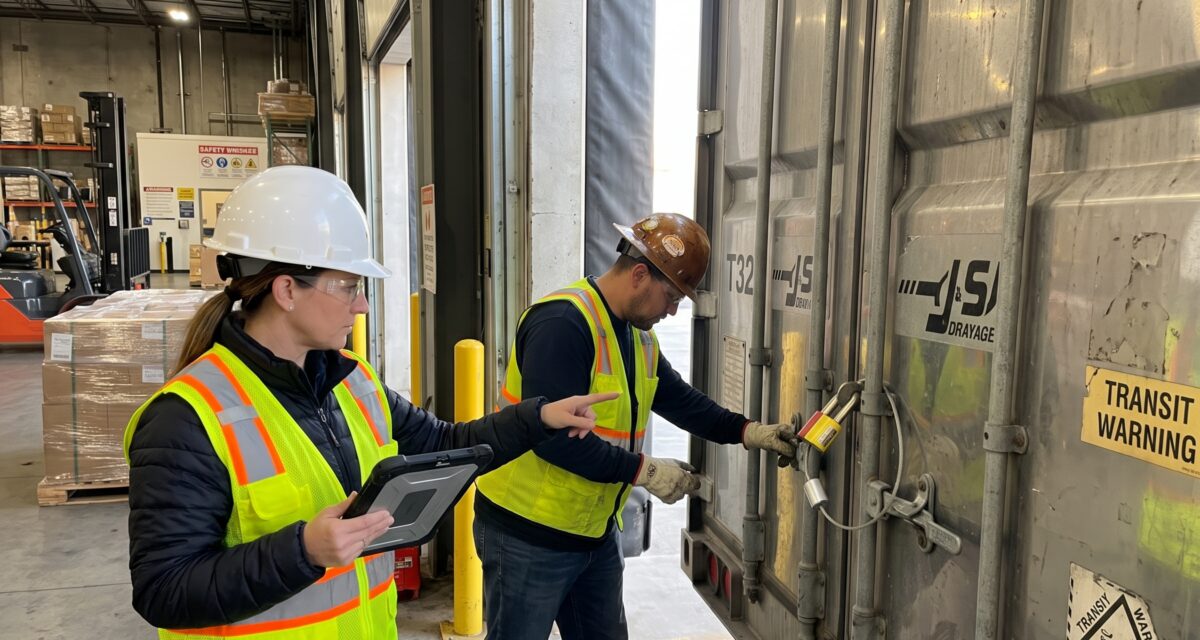
Cargo theft across major California transport corridors reached record levels in recent years, with strategic logistics hubs across the San Francisco Bay Area and Central Valley facing sophisticated organized theft rings. For supply chain executives, manufacturers, and freight brokers moving high-value electronics, industrial machinery, and precision goods, a warehouse is more than temporary floor space—it is the central safeguard for physical assets and balance-sheet equity.
Selecting a storage partner requires looking beyond square footage rates. When freight transitions from ocean container drayage to dock staging and racking, security gaps frequently appear at transfer points. Finding a reliable, secure warehouse in Livermore, CA that implements comprehensive physical security, strict safety compliance, and clear chain-of-custody controls is essential for maintaining supply chain continuity.
Non-Negotiable Security Features for Commercial Storage
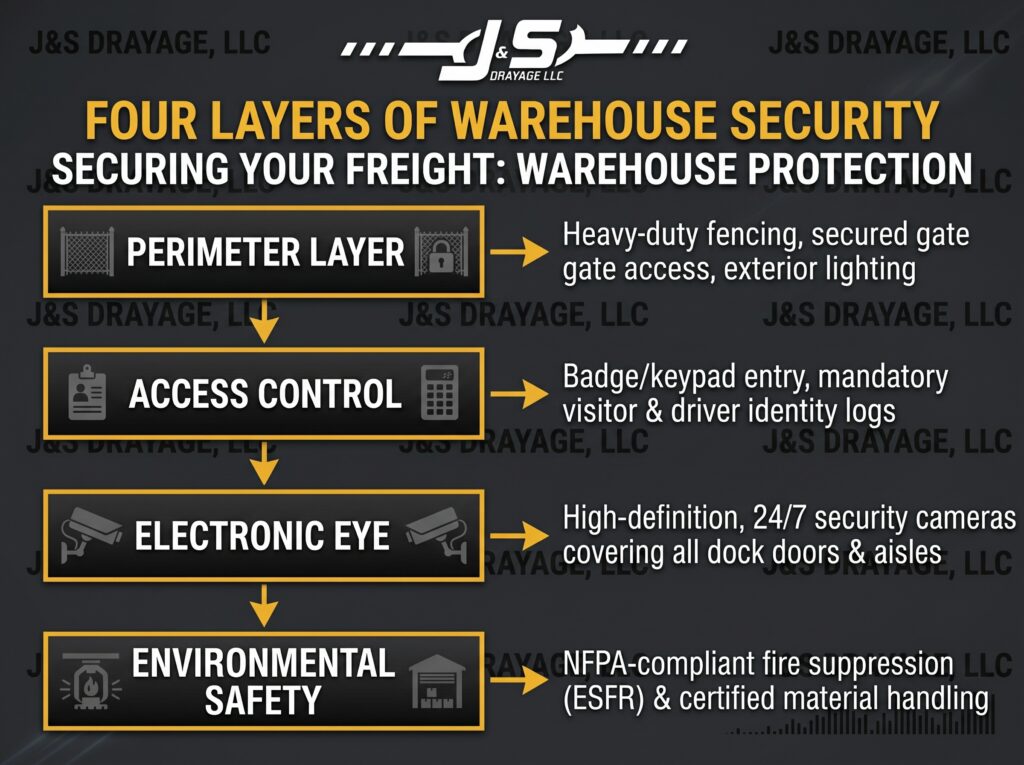
When vetting monitored commercial storage in the Bay Area, logistics directors must demand multi-layered security infrastructure. A perimeter fence alone is insufficient for modern high-value freight. Commercial facilities must maintain synchronized physical and electronic defense layers.
1. Continuous 24/7 Video Surveillance and Archiving
Camera placement dictates surveillance effectiveness. Security cameras must provide complete coverage of exterior yards, entrance and exit gates, loading dock bays, and interior storage lanes.
- High-definition recording must capture tractor numbers, trailer license plates, and driver faces in varying lighting conditions.
- Footage should be archived on secure servers for a minimum of 30 to 60 days to allow retroactive investigation if inventory discrepancies emerge down the line.
2. Electronic Access Control and Visitor Accountability
Uncontrolled pedestrian or driver access inside a warehouse floor creates severe liability. Secure facilities enforce strict zoning:
- Drivers remain in designated driver lounges or check-in windows during live loading and devanning.
- Warehouse staging and rack aisles require electronic keycard or biometric access, maintaining digital audit trails of everyone entering storage zones.
- All third-party technicians, inspectors, and contractors must sign in with government-issued photo identification.
3. Perimeter Hardening and Yard Security
Before cargo reaches a dock door, it sits in the staging yard. Secured yards require full perimeter security fencing, adequate floodlighting across trailer parking stalls, and locked gate protocols during non-operational hours to prevent unauthorized trailer hookups.
4. Fire-Suppression and Building Life-Safety Standards
Physical asset security extends to environmental hazards. Facilities storing high-density pallet racks or heavy commercial goods must maintain National Fire Protection Association (NFPA) compliance, including Early Suppression Fast Response (ESFR) ceiling sprinkler networks, routine backflow testing, and clear, unobstructed egress paths.
Chain of Custody: From Port of Oakland Gate to Livermore Dock Door
The highest vulnerability in containerized trade occurs during the intermodal handoff. A seamless chain of custody eliminates blind spots between the marine terminal discharge and warehouse intake.
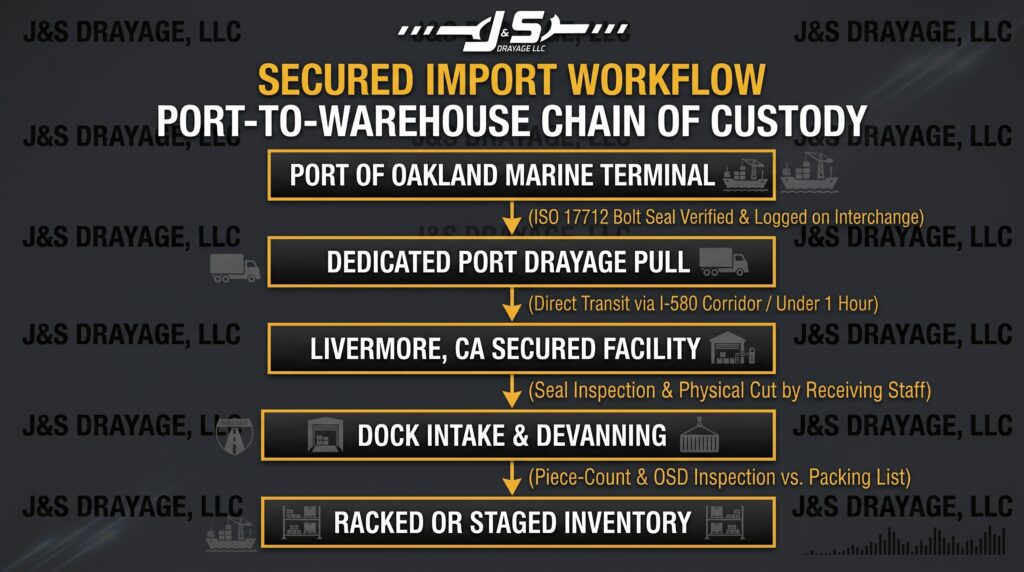
- Terminal Gate Release: As the container is mounted to a chassis at the Port of Oakland, the drayage driver performs a physical inspection of the steamship line’s high-security ISO 17712 bolt seal. The serial number is matched against the delivery order and equipment interchange receipt (EIR).
- Direct-Route Transit: The container moves along dedicated freight corridors—such as the Interstate 580 artery directly east into Livermore—minimizing unnecessary intermediate stops or off-route staging.
- Receiving Verification: Upon arrival at the warehouse, the receiving supervisor inspects the bolt seal for tool marks or tampering before the seal is cut.
- Devanning and OSD Tally: As freight is devanned (unloaded), warehouse personnel verify piece counts against the commercial packing list, recording any Over, Short, or Damaged (OSD) items immediately with photographic proof.
- WMS Ingestion: Pallets are tagged with unique warehouse management system identifiers and assigned designated racking or floor positions.
10-Point Warehouse Security and Safety Compliance Checklist
Brokers and supply chain managers can use this 10-point checklist when auditing third-party facilities for high-value freight:
| # | Inspection Item | Verification Standard | Pass/Fail |
| 1 | Perimeter Security | Fully enclosed fencing, commercial gates, and adequate exterior night lighting across staging yards. | [ ] |
| 2 | Surveillance Coverage | 24/7 security cameras monitoring gates, docks, and interior aisles with 30+ day cloud or local recording retention. | [ ] |
| 3 | Access Management | Controlled badge/code entry points; physical separation between driver waiting zones and warehouse inventory. | [ ] |
| 4 | Visitor Log Protocol | Mandatory photo ID check-in, logged time stamps, and visitor escorts within the facility. | [ ] |
| 5 | Driver Seal Procedures | Documented seal number logging at gate-in, pre-cut tampering checks, and dual-party sign-off on the Bill of Lading. | [ ] |
| 6 | Fire-Suppression Systems | Certified NFPA-compliant sprinkler infrastructure (ESFR rated for high-density storage) with up-to-date inspection tags. | [ ] |
| 7 | Equipment Maintenance | Documented daily inspection logs for forklifts, clamp trucks, and dock levelers. | [ ] |
| 8 | Hazard & Egress Clearances | Minimum 36-inch clearance maintained around electrical panels; clearly marked, unobstructed emergency exits. | [ ] |
| 9 | Employee Screening | Documented background check policies for warehouse personnel handling high-value commercial shipments. | [ ] |
| 10 | Insurance & Liability | Active Warehouse Legal Liability coverage matching the value density of stored commercial commodities. | [ ] |
Strategic Advantages of Staging Freight in Livermore, CA
Selecting a warehouse location is an optimization balance between port access and regional distribution efficiency.
Positioned in Alameda County along the I-580 corridor, Livermore operates as the gateway connecting the Port of Oakland to the Central Valley, Northern California population centers, and long-haul lanes to Texas. Staging freight in Livermore provides three tangible operational advantages:
- Under-One-Hour Port Transit: Situated less than an hour from the Port of Oakland marine terminals, local drayage drivers can pull containers quickly, helping shippers avoid expensive port demurrage charges and chassis detention fees.
- Insulation from Urban Port Congestion: Warehousing outside the immediate port industrial zone avoids the gridlock and elevated crime rates typical of dense waterfront yards while remaining close enough for same-day container turns.
- Multi-Modal Distribution Readiness: Staged goods can be transloaded rapidly from 20-foot or 40-foot ocean containers into 53-foot domestic dry vans for long-haul linehauls across interstate networks.
J&S Drayage: Dedicated Warehousing and Logistics Services
At J&S Drayage, we combine responsive transportation with secure, practical warehousing infrastructure. Located at 7650 Marathon Dr Ste N, Livermore, CA 94550, our dedicated 32,000 sq. ft. commercial warehouse facility is specifically engineered for high-value freight, heavy equipment, and transload operations.
Our Livermore facility provides:
- Secured Perimeter: Fully fenced facility designed to safeguard valuable commercial assets and equipment.
- Continuous Monitoring: 24/7 security cameras actively recording yard movements, dock doors, and interior floor space.
- Turnkey Port-to-Warehouse Integration: Less than an hour from ocean berths, our company-operated Port of Oakland drayage services coordinate seamlessly with warehouse devanning crews.
- Flexible Storage Terms: Scalable short-term emergency cross-docking and long-term palletized storage solutions tailored to manufacturers, importers, and freight brokers.
- Downstream Highway Capacity: Smooth handoffs from warehouse storage into our dedicated California dry van transportation and multi-state corridors into Texas.
Connecting port drayage directly to a company-managed secure warehouse eliminates handoff friction, mitigates cargo risk, and keeps your supply chain moving on schedule.