

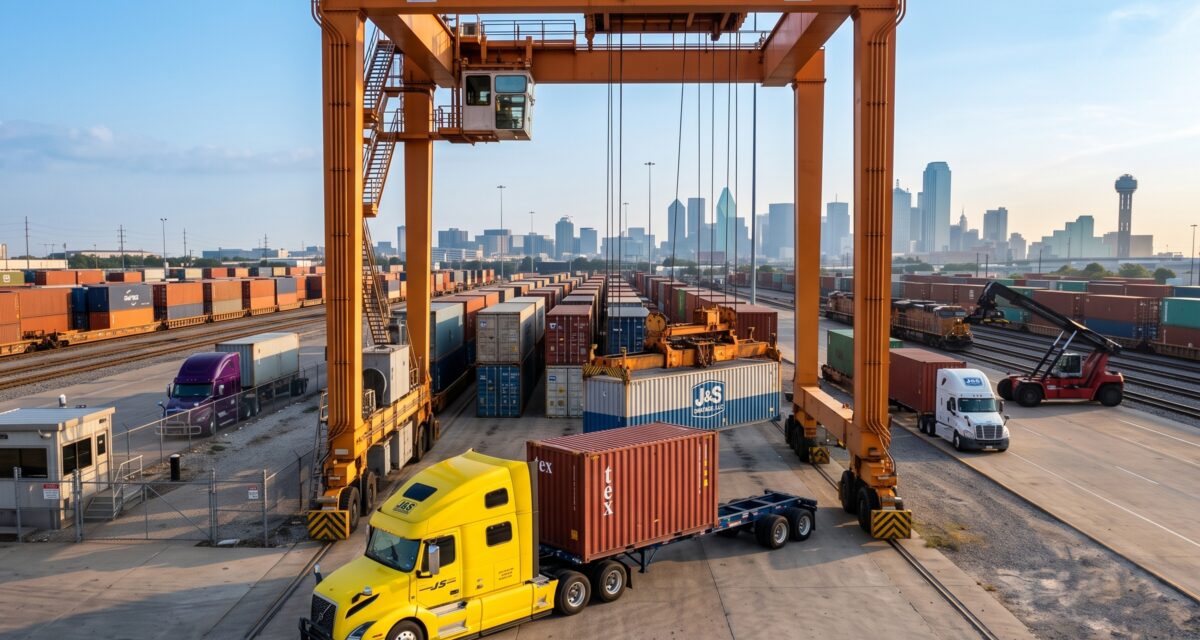
Texas continues to cement its role as a critical epicenter for North American freight movement. Driven by rapid population growth, expanding manufacturing footprints, and shifting international trade routes, the Texas supply chain handles immense volumes of import, export, and domestic cargo daily.
For logistics managers and freight brokers, managing transportation across the Lone Star State presents distinct operational opportunities and friction points. From navigating rail ramps in the Dallas-Fort Worth (DFW) metroplex to staging regional dry van hauls out of Houston, maintaining smooth freight flow requires clear visibility into local infrastructure and carrier capacity.
Key Drivers Shaping Texas Freight Infrastructure
Understanding how freight moves through Texas requires looking at the regional networks connecting ocean ports, inland rail ramps, and major highway corridors.
1. The Gulf Coast and Cross-Border Trade Surge
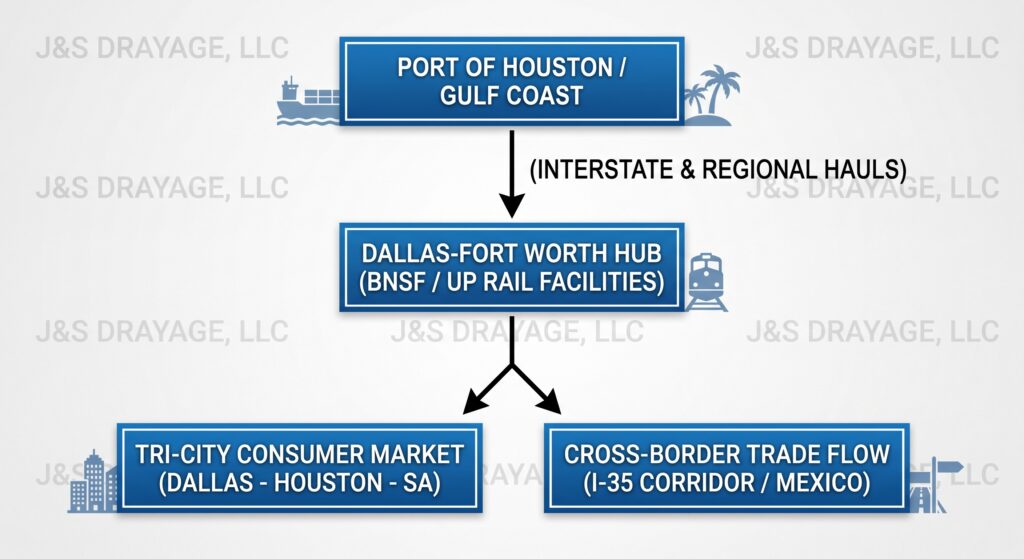
Port activity at the Port of Houston, combined with manufacturing activity along the U.S.-Mexico border, has altered historical freight patterns. More containerized freight is entering via Gulf ports or moving north through border crossings like Laredo and Hidalgo. This influx drives higher demand for immediate regional drayage and rapid transition to dry van networks.
2. The Dallas-Fort Worth Freight Hub
DFW operates as the primary inland distribution capital of the Southwest. Major Class I railroads—including BNSF and Union Pacific—maintain massive intermodal facilities here (such as BNSF Logistics Park Chicago connections and Alliance Intermodal Facility). Cargo arriving by rail requires efficient drayage to clear ramps, avoid storage fees, and transfer into regional distribution networks.
3. Infrastructure and Capacity Pressures on Key Corridors
Interstate 35 (connecting Laredo to DFW) and Interstate 45 (connecting Houston to Dallas) remain two of the heaviest freight corridors in the country. Highway congestion, seasonal surges, and chassis availability at rail ramps regularly test shipper agility.
Navigating Dallas Rail Drayage and Intermodal Operations
Intermodal rail freight is one of the most cost-effective ways to transport goods into Texas, but the transition from railcar to highway requires precise execution.
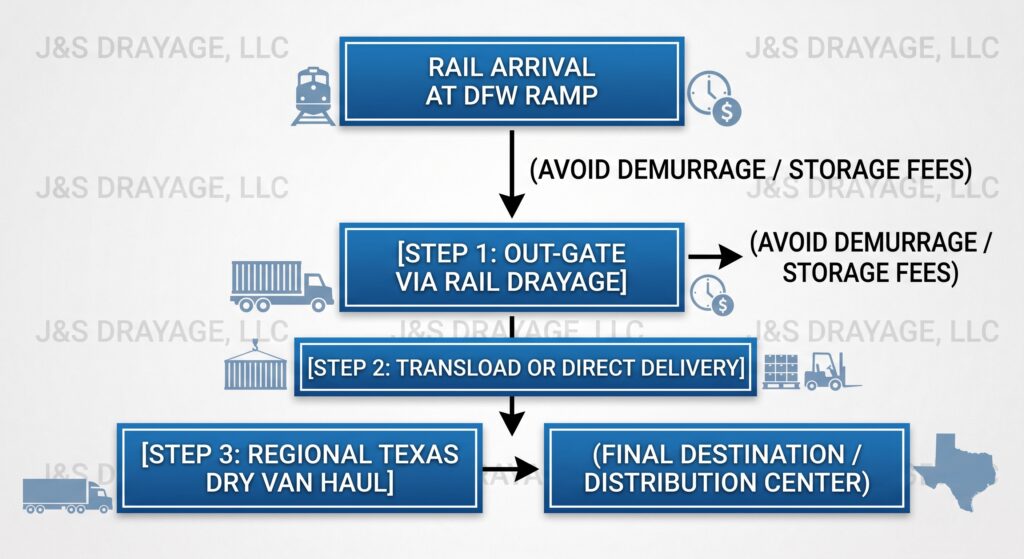
When containerized freight arrives at DFW-area rail ramps, shippers face rigid dwell-time windows. Missed free time results in costly demurrage charges and delayed customer deliveries.
Operational factors to monitor for Dallas rail drayage include:
Ramp Congestion & Free Time: Most rail ramps offer limited free storage (often 24 to 48 hours) once a container is grounded. Securing a drayage partner with immediate power capacity in Dallas is essential to out-gate containers before daily storage fees mount.
Chassis Provisioning: Matching the right chassis (standard 20/40ft, tri-axle for heavy loads) at rail yards prevents drivers from spending hours waiting in line or hunting down operable equipment.
Transloading vs. Direct Delivery: Depending on final destination requirements, shippers must decide whether to haul the intermodal container directly to the receiver or transload cargo into a standard 53-foot dry van to maximize cube space and reduce long-haul equipment costs.
Regional Texas Dry Van Transportation: Optimizing Intra-State Lanes
Once freight enters the state via ocean port, rail, or cross-border point, dry van trucking carries the load to final distribution points. Regional Texas dry van operations involve specific considerations that set them apart from standard long-haul trucking.
Intrastate Distance and Driver Hours
Texas geography is vast; a haul from Houston to El Paso spans over 700 miles—longer than the distance from Atlanta to Detroit. Managing driver Hours of Service (HOS) on intrastate lanes requires strict route planning. High-density lanes like Dallas-to-Houston (~240 miles) allow for quick turnarounds, provided loading facilities handle staging efficiently.
Facility Staging and Drop-and-Hook Capabilities
Major distribution centers across Texas increasingly favor drop-and-hook models over live loading. Securing a carrier with a reliable trailer pool allows shippers to pre-load cargo, preventing dock congestion and eliminating detention charges.
Seasonal Demand Swings
Retail peak season, agricultural harvests, and industrial manufacturing cycles cause regional capacity swings. Establishing dedicated capacity on core corridors prevents shippers from relying solely on spot-market freight rates during high-volume periods.
What Shippers Should Look For in a Texas Logistics Partner
Selecting a carrier for Texas freight operations requires verifying both fleet flexibility and local asset availability. Whether moving intermodal containers out of a Dallas rail yard or staging regional dry van freight across the state, consider these core operational capabilities:
| Evaluation Area | Key Questions to Ask | Why It Matters |
| Rail Ramp Familiarity | Does the driver network hold active credentials for major DFW rail ramps? | Prevents access delays and out-gate bottlenecks at facilities like BNSF Alliance or UP Dallas Intermodal Terminal. |
| Asset Flexibility | Can the carrier handle both container drayage and standard 53ft dry van moves? | Streamlines multi-modal shipments, eliminating the need to manage separate drayage and over-the-road vendors. |
| Communication & Visibility | How does the provider track container status and notify shippers of delays? | Proactive tracking helps avoid unexpected demurrage, detention, and missed delivery appointments. |
| Regional Lane Density | Does the carrier maintain frequent coverage along I-35, I-45, and I-10? | Ensures consistent capacity and competitive lead times on primary Texas freight routes. |
Aligning Intermodal and Dry Van Services with J&S Drayage
Managing regional supply chains requires clear coordination between rail head operations and highway transport. J&S Drayage LLC supports shippers and freight brokers with dependable transportation solutions across Texas key commercial lanes.
By coupling local drayage capabilities with robust trucking services, J&S helps businesses streamline their Texas logistics operations:
Texas Dry Van Services: Reliable regional transportation for dry freight across major commercial lanes, offering consistent capacity and professional asset-based execution. Learn more about our regional coverage via our Texas dry van services page.
Dallas Rail Drayage Support: Grounded container pick-up and drop-off capabilities across DFW rail facilities to minimize ramp dwell times and lower supply chain costs.
Inter-Market Logistics Flexibility: For companies operating across multiple major trade hubs, J&S also maintains specialized port drayage and warehousing infrastructure in California—including secured storage at our 32,000 sq. ft. facility near the Port of Oakland drayage services hub.
Whether you need consistent daily dry van capacity or targeted support clearing intermodal rail containers in Dallas, working with an experienced carrier keeps your freight moving on schedule.