

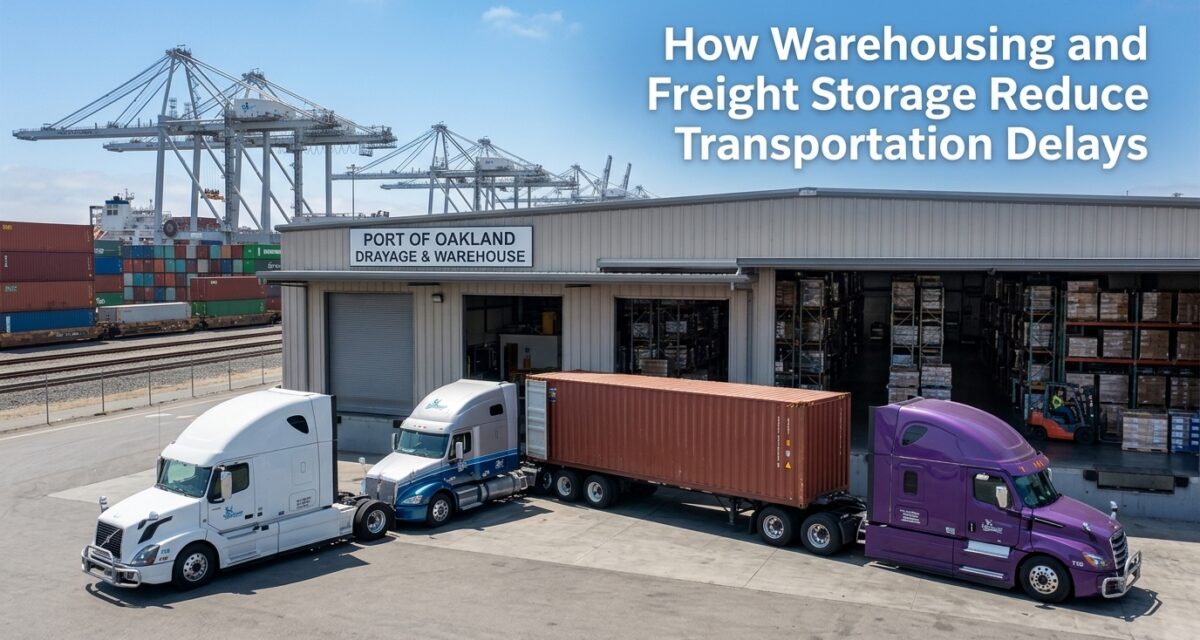
Inbound container shipping and long-haul transportation rarely move on an identical clock. Ocean carriers face terminal congestion, ocean vessels hit berth delays, and over-the-road trucking lines contend with strict hours-of-service (HOS) limits. When ocean drayage, rail transit, and final-mile trucking are tightly bound without a buffer, a minor disruption anywhere in the supply chain triggers costly delays, demurrage penalties, and missed delivery appointments.
Strategically positioned freight storage and warehousing resolve this friction. By establishing an intermediate staged staging ground between port terminals and final delivery destinations, logistics managers insulate their supply chains from unpredictable transport schedules.
The Root Causes of Port and Transit Delays
Understanding why transportation bottlenecks occur is the first step in mitigating them. In high-density freight corridors—such as Northern California’s Bay Area—delays generally stem from three operational friction points:
1.Port Gate Congestion and Terminal Delays: Ocean terminals at the Port of Oakland and major rail ramps frequently experience gate queuing, container pile-ups, and sudden vessel schedule revisions.
2. Strict Free-Time Limits: Steamship lines and port terminals grant limited free-time windows (typically 3 to 5 days) before charging steep daily demurrage and container detention penalties.
3. Consignee Receiving Bottlenecks: Distribution centers often have limited dock doors, strict appointment windows, or labor shortages that prevent them from receiving ocean containers on short notice.
When ocean containers sit mounted on chassis while waiting for a receiver’s dock window, daily equipment rental costs escalate rapidly.
Strategic Freight Storage as a Supply Chain Circuit Breaker
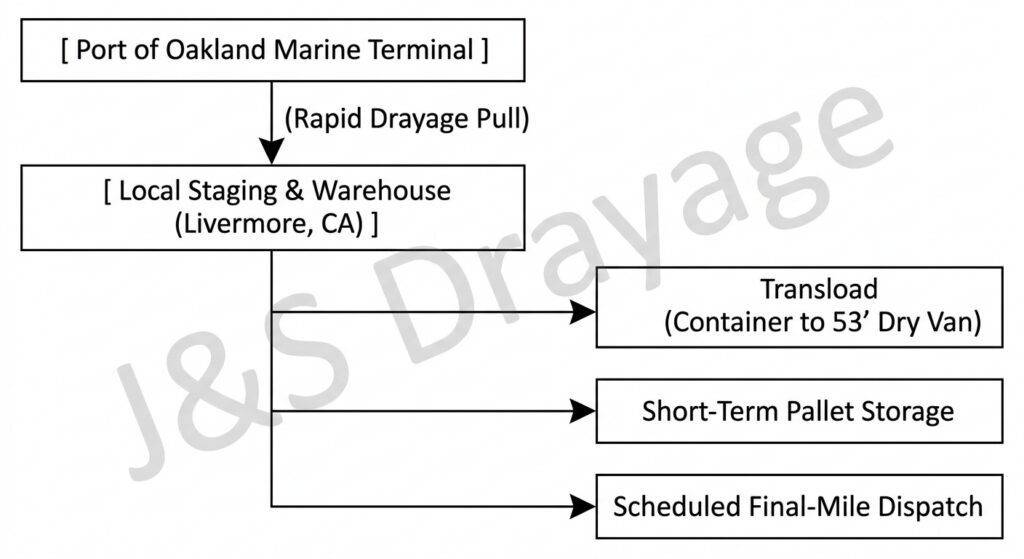
Using a strategically located California warehouse acts as a circuit breaker for transportation delays. Instead of keeping ocean containers tied up on wheels or waiting inside congested marine terminals, shippers pull containers off the dock immediately upon discharge and move them directly to a local warehouse.
1. Eliminating Terminal Demurrage and Equipment Detention
Demurrage charges accrue when an import container remains inside the ocean terminal past its free time. Detention charges mount when the container stays out of the port past its allowed return window.
By utilizing local drayage to pull containers to a warehouse near the Port of Oakland as soon as they clear customs, shippers stop the port’s demurrage clock. Once at the warehouse, goods are devanned (unloaded), allowing the empty container and chassis to be returned quickly to the ocean terminal, avoiding daily detention penalties.
2. Fast-Tracking Cargo via Transloading and Pallet Storage
Direct store delivery using ocean containers is inherently inefficient. Ocean containers are designed for ocean transit, not optimized for domestic road networks.
Through transloading, cargo is unloaded from 20-foot or 40-foot ocean containers and repalletized for short- or long-term pallet storage. Goods can then be consolidated into standard 53-foot dry van trailers. Because three 40-foot ocean containers typically fit into two 53-foot domestic dry vans, transloading immediately cuts long-haul linehaul costs while freeing up cargo for flexible floor-ready dispatch.
| Shipping Method | Equipment Utilized | Storage Flexibility | Demurrage / Detention Risk |
| Direct Import Delivery | Ocean Container & Chassis | Extremely Low (Fixed delivery window) | High (Accumulates daily fees if delayed) |
| Transload & Warehouse Staging | 53′ Domestic Dry Van | High (Staged until receiver is ready) | Eliminated (Container returned promptly) |
Key Features to Look For in a Regional Warehouse Facility
Not all warehouse facilities provide equal relief from transport delays. When evaluating warehouse companies in Livermore or broader Northern California corridors, ensure the facility meets operational requirements for heavy, fast-moving freight:
Proximity to Key Freight Gateways: A facility located less than an hour from major port terminals allows drayage drivers to complete multiple container pulls per shift without exceeding HOS regulations.
Secured Facility Infrastructure: High-value industrial cargo and equipment require perimeter security fencing, controlled gate access, and 24/7 security camera coverage.
Flexible Storage Configurations: Look for facilities capable of handling standard pallet storage as well as oversized, heavy equipment, or floor-loaded container devanning.
Integrated Transportation Services: Warehouses that operate in tandem with dedicated dry van trucking and port drayage eliminate handoff friction between separate providers.
Located in the East Bay, J&S Drayage operates a secure 32,000 sq. ft. warehousing facility at 7650 Marathon Dr Ste N, Livermore, CA 94550. Positioned less than an hour from the Port of Oakland, this facility features continuous camera monitoring, secure yard space, and dedicated handling capabilities for palletized freight, heavy equipment, and transload operations.
Operational Best Practices for Shippers and Brokers
To maximize transit efficiency and prevent warehousing from becoming a bottleneck itself, implement these core practices:
1. Pre-Clear Customs Documentation: Ensure entry filings are completed prior to vessel arrival so drayage drivers can pull containers the moment they are mounted and released.
2. Establish Buffer Inventory for High-Demand SKUs: Use short-term pallet storage near your primary markets to fulfill sudden spikes in demand without waiting on ocean freight arrivals.
3. Align Drayage and Warehouse Schedules: Work with a single-source logistics provider that handles both port drayage and warehouse receiving to streamline dock appointments and container turnarounds.