

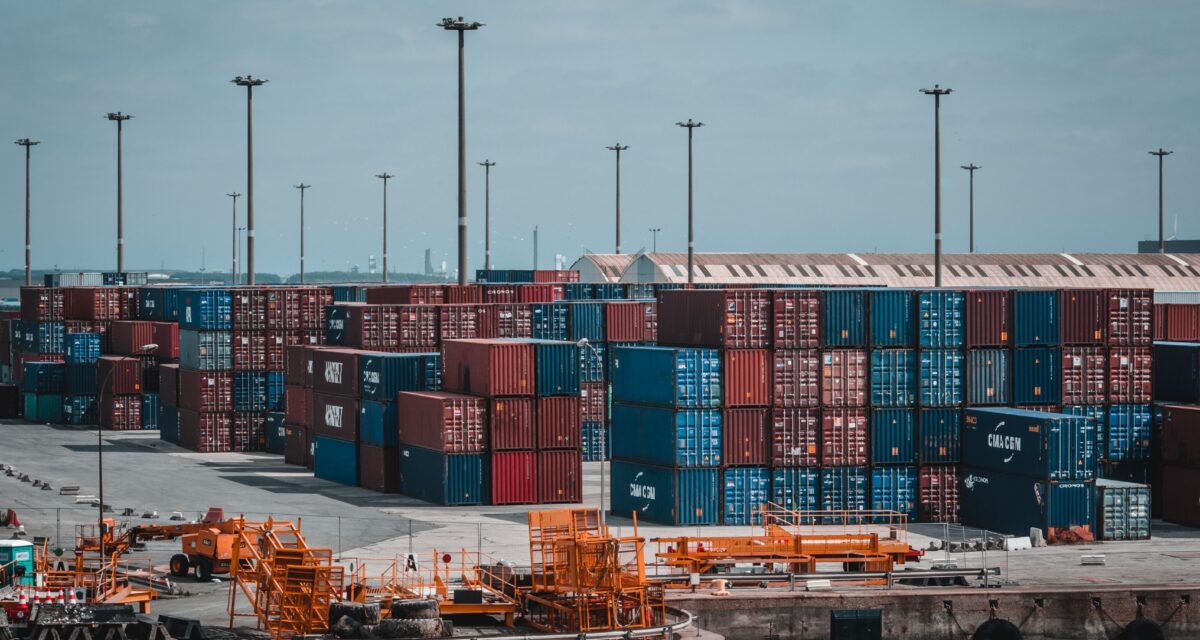
For an importer or manufacturer, choosing a warehouse is about more than finding available square footage.
The warehouse affects how quickly freight can move from the Port of Oakland into storage, how easily inventory can be accessed, how many times freight has to be handled, and how efficiently orders can move back into transportation.
That is particularly important for companies moving containerized freight through Northern California. The right warehouse location can create a more practical connection between port drayage, storage, transloading, and distribution.
For businesses searching for a warehouse near Livermore, California, Livermore can be worth considering as part of a broader Oakland-area logistics strategy. The decision, however, should be based on more than distance alone.
This guide explains what importers, manufacturers, and logistics managers should evaluate when selecting warehouse space in California.
What Should You Look for in a California Warehouse?
The right warehouse depends on your freight, transportation network, inventory requirements, and expected shipment volume.
Before choosing a facility, evaluate these areas:
Location: How easily can trucks reach the warehouse from the port, rail terminal, suppliers, and customers?
Freight type: Does the facility handle your commodities and packaging requirements?
Storage: Is there enough space for your normal inventory level and seasonal increases?
Loading and unloading: Does the facility have appropriate dock and entry access?
Value-added services: Can the warehouse handle palletizing, restacking, rework, labeling, or transloading if needed?
Security: What physical and operational measures are in place to protect inventory?
Transportation coordination: Can the warehouse work effectively with your drayage and trucking provider?
Flexibility: Can the provider accommodate short-term storage, longer-term inventory, or changing freight requirements?
A warehouse that looks inexpensive on a per-pallet or per-square-foot basis may not be the most economical option if it creates additional transportation miles, unnecessary handling, or operational delays.
Why Warehouse Location Matters for Port of Oakland Freight
The Port of Oakland is an important gateway for Northern California import and export activity. Cargo volumes can change from month to month, making transportation planning and inventory flexibility important for businesses using the port. In August 2026, for example, the Port reported 173,818 TEUs of total container volume and 131,666 TEUs of loaded cargo.
For an importer, the supply chain may look roughly like this:
Ocean vessel → Port of Oakland → Drayage → Warehouse → Distribution → Customer
The warehouse is therefore not an isolated storage point. It is one part of the transportation network.
A warehouse location that works well with the drayage operation can help reduce unnecessary movement between transportation stages.
Port proximity is useful—but it is not the only consideration
A warehouse does not necessarily have to be immediately adjacent to the port to be useful.
A slightly farther facility may make more sense if it provides:
-Better access for trucks
– Suitable loading and unloading infrastructure
-Appropriate storage capacity
-Required freight handling services
-Better access to the company’s customers or distribution network
-The right type of space for the cargo
-A transportation provider capable of coordinating the port move
The objective is not simply to minimize the number of miles between the port and warehouse.
The objective is to build a reliable freight flow.
Is Livermore a Good Location for a Warehouse?
For companies handling Northern California freight, Livermore, California can be a practical warehouse location to evaluate.
Its value should be considered in relation to the entire transportation network rather than as a standalone warehouse market.
For an importer using the Port of Oakland, the relevant question is:
Can this facility efficiently receive freight from Oakland, store or process it, and then move it toward its next destination?
That could mean distribution to customers, movement to a manufacturing facility, regional trucking, or another transportation leg.
For manufacturers, the calculation may be different. A Livermore facility may be useful as an inventory buffer, staging location, or distribution point depending on where production and customers are located.
What Is the Difference Between Storage, Warehousing and Distribution?
These terms are sometimes used interchangeably, but they can describe different operational needs.
Storage
Storage primarily means holding inventory until it is needed.
A company might use short-term storage when freight arrives before its customer is ready to receive it, or longer-term storage when inventory needs to remain at an off-site facility.
Warehousing
Warehousing can include storage plus activities involved in receiving, organizing, handling, and preparing freight.
Depending on the provider, services may include:
Receiving
Loading and unloading
Palletizing
Repacking
Restacking
Labeling
Inventory Handling
Freight rework
Transloading
Distribution
Distribution extends beyond simply storing inventory.
The warehouse becomes part of a larger process in which goods are prepared and released toward customers, stores, manufacturers, job sites, or other destinations.
For an importer, the distinction matters because a facility that only provides storage may not solve a transportation or freight-handling problem.
When Does Transloading Make Sense?
Transloading involves moving freight from one transportation method or equipment type to another.
For example, imported freight may arrive at the Port of Oakland in a marine container and then be transferred into a dry van or another transportation configuration for onward movement.
Transloading can be useful when:
Freight needs to leave a container and move into domestic transportation
Imported cargo needs to be consolidated or separated
The original container is not appropriate for the next transportation leg
Freight needs to be staged before distribution
A shipper wants to combine warehouse and transportation operations
The important question is whether the warehouse has the appropriate processes and equipment for the freight involved.
If you are searching for transloading near California, do not evaluate providers solely by whether they advertise transloading. Ask what types of freight they handle, what services are included, and how the transload connects to your transportation plan.
What Types of Freight Can a Warehouse Handle?
Warehouse suitability depends heavily on the commodity.
An importer or manufacturer should confirm that the facility can accommodate:
Product dimensions and weights
Pallet configurations
Packaging requirements
Storage duration
Required handling procedures
Special environmental requirements
Any applicable regulatory restrictions
J&S Drayage’s published warehouse information identifies dry goods such as construction materials, non-perishable food and beverage products, industrial equipment, agricultural products, retail goods, automotive parts, and electronics among the freight categories it handles. The company also states that its warehouse does not accommodate perishable, hazardous, or refrigerated goods.
That distinction is important.
A shipper should never assume that a warehouse can handle a particular commodity simply because the facility has available space.
Heavy or oversized freight requires additional planning
Manufacturers and industrial companies may have requirements that differ significantly from conventional palletized consumer goods.
Before booking space, discuss:
Product weight
Dimensions
Packaging
Unloading requirements
Equipment requirements
Floor-level access
Storage configuration
Frequency of inbound and outbound movements
The warehouse should be evaluated based on the actual freight—not just the number of square feet available.
Warehouse Services That Can Improve Freight Efficiency
Storage is only one part of a warehouse operation.
Depending on the shipper’s requirements, value-added services can help reduce additional handling elsewhere in the supply chain.
Examples include:
Cross-docking
Freight is transferred through the facility with limited or no long-term storage.
This can be useful when inventory is already allocated to specific destinations and needs to move quickly.
Palletizing and shrink wrapping
Freight may need to be stabilized or prepared for domestic transportation.
Repacking and restacking
Cargo sometimes arrives in a configuration that does not work for its next transportation or distribution stage.
Reworking the load at the warehouse can make the next movement more practical.
Labeling
Warehouse-based labeling can be useful when products need to be prepared for a particular customer, distribution channel, or shipment.
Transloading
Imported freight can be transferred between transportation equipment or prepared for the next stage of its journey.
J&S’s published warehousing services include cross-docking, distressed-load rework, labeling, short- and long-term storage, overweight-load rework, palletizing, shrink wrapping, repacking, restacking, reworking, transloading, and warehousing.
How Warehouse and Drayage Should Work Together
One of the most important considerations for an importer is what happens between the port and warehouse.
Suppose a container arrives at the Port of Oakland.
The supply chain may require:
Container pickup
Drayage to the warehouse
Unloading or transloading
Storage
Inventory preparation
Domestic transportation
Final delivery
If these steps are handled independently by multiple providers, communication becomes an important operational consideration.
A transportation provider that understands the warehouse process can help make the handoff more straightforward.
J&S Drayage provides Port of Oakland drayage as well as warehousing in Livermore, allowing customers to evaluate the two services as connected parts of their freight operation. J&S’s website specifically describes its Port of Oakland service as moving containers between the port and warehouses or distribution centers.
For an importer, that combination can be more useful than evaluating warehouse and drayage services entirely separately.
Questions to Ask Before Choosing a Warehouse
Before committing inventory to a California warehouse, ask the provider:
About the facility
Where is the warehouse located?
How accessible is it for commercial trucks?
What types of freight are accepted?
What storage options are available?
How is inventory secured?
About handling
Can you unload and reload freight?
Do you provide palletizing or shrink wrapping?
Can you perform rework or restacking?
Is transloading available?
Can you accommodate heavy equipment or unusual freight?
About transportation
Can you coordinate with our drayage provider?
Do you provide transportation services?
Can freight move from the Port of Oakland directly to the warehouse?
Can outbound freight be arranged from the warehouse?
About commercial terms
Is pricing based on square footage, pallets, handling, or another structure?
Are receiving and outbound handling charged separately?
Are there minimum storage periods?
What happens when inventory volume increases?
What information is required to provide an accurate quote?
These questions help separate a warehouse that simply has space from a provider that can actually support the shipper’s logistics operation.
How Much Does California Warehouse Storage Cost?
There is no single warehouse rate that applies to every shipment or facility.
Pricing can depend on:
- Location
- Required storage space
- Number of pallets
- Inventory turnover
- Storage duration
- Inbound handling
- Outbound handling
- Transloading
- Rework
- Palletizing
- Special handling requirements
- Transportation requirements
For that reason, a warehouse quote should be based on the shipper’s actual operating profile.
When requesting a quote, provide as much information as possible about:
- Commodity
- Number of pallets or units
- Average and peak inventory
- Pallet dimensions and weight
- Inbound frequency
- Outbound frequency
- Expected storage duration
- Origin and destination
- Any required value-added services
That gives the provider enough information to evaluate the complete requirement rather than quoting storage in isolation.
J&S Drayage’s Livermore Warehouse
J&S Drayage operates a warehouse at 7650 Marathon Drive, Suite N, Livermore, CA 94550.
The company’s published information describes the facility as providing warehouse storage and related freight services, including transloading, cross-docking, palletizing, reworking, repacking, restacking, labeling, and short- and long-term storage.
J&S also provides transportation and Port of Oakland drayage, creating an opportunity for shippers that need both freight transportation and warehouse support rather than storage alone.
For an importer or manufacturer, the practical question is whether those services match the freight profile, storage requirements, and transportation lanes involved.
Important: J&S’s current website contains different descriptions of warehouse square footage on different pages. Before publication, the company should verify the current facility size and use one approved figure consistently across the website and this article.
When Should You Use a Warehouse Near the Port of Oakland?
A warehouse near the Oakland freight market can make sense when you need to:
- Hold imported inventory before distribution
- Transload containers into domestic transportation
- Stage freight for customers
- Manage fluctuating inventory
- Consolidate or rework loads
- Reduce unnecessary transportation steps
- Create a buffer between port arrivals and customer delivery schedules
The right answer depends on your network.
For some companies, the most important factor is port access. For others, customer proximity or access to major California transportation routes may matter more.
The best warehouse is the one that fits the entire freight movement, not simply the shortest distance from the terminal.
A Practical Warehouse Selection Checklist
Before choosing a warehouse provider in California, confirm:
- Facility location fits your transportation network
- Freight type is accepted
- Storage capacity fits normal and peak inventory
- Truck access is suitable
- Loading and unloading requirements are supported
- Security requirements are met
- Transloading is available if required
- Cross-docking is available if required
- Palletizing or rework is available if required
- Transportation requirements are understood
- Pricing structure is clear
- Inbound and outbound handling charges are understood
- The provider can accommodate changes in volume
- Communication and shipment visibility expectations are established
This checklist can prevent a common mistake: choosing a facility based on storage space while overlooking the transportation and handling services required to actually move the freight.
Why Warehouse Location Should Be Part of Your Transportation Strategy
For importers and manufacturers, warehousing and transportation should not be treated as completely separate decisions.
A container arriving at Oakland still has to reach its next destination. Inventory stored in Livermore still has to move to customers or production facilities. The more effectively those stages are coordinated, the easier it can be to manage the physical movement of freight.
That is why companies evaluating a California warehouse should consider the full route:
Port → Drayage → Warehouse → Processing/Storage → Trucking → Customer
J&S Drayage works across these transportation and warehousing requirements, with Port of Oakland drayage, dry van transportation, and a Livermore warehouse among its services.
The appropriate solution will depend on the shipper’s commodity, volume, destinations, timing, and handling requirements.
Final Thoughts
Choosing a warehouse in California is ultimately a logistics decision, not just a real-estate decision.
For businesses importing through Oakland, a facility in or around Livermore can be worth evaluating when it fits the company’s transportation network and inventory requirements. The right provider should be able to explain not only where the freight will be stored, but how it will be received, handled, released, and connected to the next transportation leg.
If your business is looking for warehouse space near Livermore or the Port of Oakland, start by defining the freight profile, storage requirements, inbound and outbound volume, and any transloading or handling services you need.
J&S Drayage can discuss those requirements and determine whether its Livermore warehousing and transportation services are a fit.
Explore J&S Drayage’s warehousing services or request a warehouse quote.