

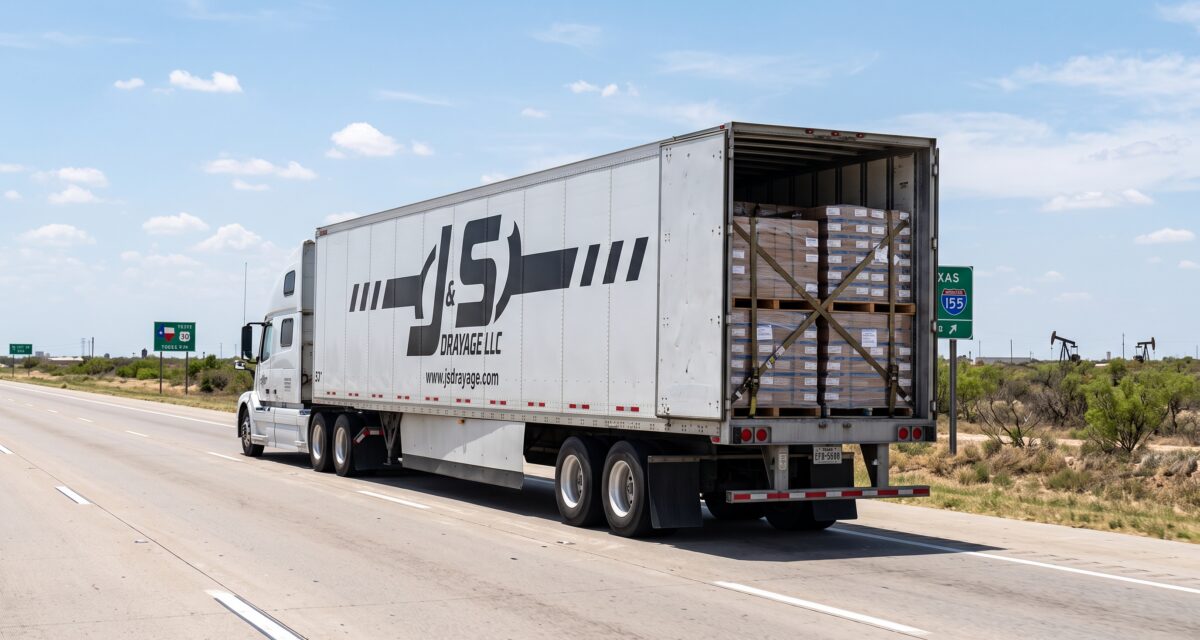
Choosing the right trailer starts with the freight itself.
For many manufacturers, shippers, and freight brokers, a dry van is the standard choice for boxed, palletized, and other non-temperature-sensitive goods. But some shipments require temperature control, specialized handling, or additional regulatory considerations.
The difference between a dry van, reefer, and specialized equipment can affect transportation cost, availability, loading requirements, and how a shipment should be handled.
For businesses moving freight into or throughout Texas, especially around major markets such as Dallas and Houston, understanding these differences can make it easier to request the right equipment and avoid unnecessary delays.
What Is a Dry Van?
A dry van is an enclosed trailer designed to protect freight from weather, road debris, and normal transportation exposure.
Dry vans are commonly used for non-perishable, non-temperature-controlled freight, including:
Packaged consumer goods
Retail products
Electronics
Automotive parts
Construction materials
Industrial equipment and components
Palletized manufactured goods
Other general dry freight
A dry van does not provide active temperature control. That makes it different from a refrigerated trailer, commonly called a reefer.
J&S Drayage provides dry van transportation across California, Texas, and Nevada, including regular lanes connecting key markets.
Dry Van vs. Reefer: What’s the Difference?
The primary difference is temperature control.
| Equipment | Typical use | Temperature controlled? | Common freight |
|---|---|---|---|
| Dry van | General freight transportation | No | Packaged goods, equipment, parts, retail freight |
| Reefer | Temperature-sensitive transportation | Yes | Perishables, pharmaceuticals, temperature-sensitive products |
| Specialized equipment | Freight with unusual dimensions or handling requirements | Depends on equipment | Oversized, heavy, liquid, or specialized cargo |
A reefer can also transport dry freight in some circumstances, but the refrigeration equipment is generally unnecessary when the shipment does not require temperature control. FMCSA materials recognize refrigerated vans as a distinct equipment segment and note that reefers can also be used for dry freight.
For a shipper, the important question is not simply “Which trailer is better?”
The question is:
What equipment does this particular shipment actually require?
When Is a Dry Van the Right Choice?
A dry van is generally appropriate when the freight:
Does not require temperature control
Does not require open-deck loading
Can be loaded into an enclosed trailer
Fits within standard legal weight and dimensional requirements
Needs protection from weather and road conditions
Can be transported without specialized environmental controls
For example, a manufacturer shipping pallets of packaged components from a distribution facility in Houston to a customer in Dallas may have a straightforward dry van requirement.
The same applies to many dryvan loads moving between distribution centers, warehouses, manufacturing facilities, and customer locations.
When Do You Need a Reefer?
A reefer is designed for freight that needs controlled temperatures during transportation.
Examples can include:
Perishable food
Certain pharmaceuticals
Temperature-sensitive ingredients
Other products with defined temperature requirements
If your product has a required temperature range, that requirement should be communicated before the load is quoted.
Important details may include:
Required temperature range
Pickup and delivery requirements
Product sensitivity
Loading instructions
Monitoring requirements
Appointment windows
Whether the trailer must be pre-cooled
A shipper should not assume that a standard dry van can substitute for a reefer simply because the freight can physically fit inside the trailer.
What About Hazmat Freight?
Hazmat is different from a trailer type.
Hazardous materials are classified according to the properties and risks of the material, and transportation requirements can include specific packaging, documentation, marking, labeling, placarding, and carrier/driver requirements.
That means “hazmat” should not automatically be treated as another type of trailer alongside dry van or reefer.
The correct equipment and regulatory requirements depend on the specific hazardous material and shipment circumstances.
Before requesting a quote for hazmat freight, provide the carrier with the applicable information from the shipment documentation so the carrier can determine whether it can legally and operationally handle the load.
J&S’s public service information states that its Port of Oakland operation handles containers including Hazmat Class 9 loads. That capability should be distinguished from general dry van freight and verified for the specific shipment before booking.
Dry Van vs. Specialized Freight: What Shippers Should Consider
Equipment selection is only one part of the transportation decision.
Before assigning a carrier, consider:
1. Freight type
What exactly is being transported?
Knowing the commodity helps determine whether standard dry van equipment is appropriate or whether additional requirements apply.
2. Weight and dimensions
Provide accurate:
Total shipment weight
Number of pallets
Pallet dimensions
Piece dimensions
Number of pieces
Loading configuration
This is particularly important for heavier industrial freight.
3. Pickup and delivery locations
A load traveling between two major distribution centers may have very different operational requirements from a shipment requiring multiple local stops.
Give the carrier complete origin and destination information when requesting a quote.
4. Local, regional, or longhaul requirements
Not every freight movement is the same.
Local and regional lanes may involve shorter transit distances, recurring pickups, multiple stops, or scheduled deliveries within a defined market.
Longhaul loads generally require transportation across longer distances and may involve multiple states.
For Texas shippers, the distinction matters because Dallas-Fort Worth and Houston sit within a major statewide freight network. TxDOT’s freight planning specifically addresses the movement of goods across the state and identifies the Texas Triangle—including Dallas-Fort Worth, Houston, San Antonio, and Austin—as a major mobility region.
5. Delivery schedule
Tell the carrier whether the shipment has:
A standard delivery window
A firm appointment
A production deadline
A retail appointment
A same-day requirement
A recurring schedule
A realistic transportation plan starts with an accurate understanding of the delivery requirement.
Dry Van Loads in Dallas and Houston
Dallas and Houston are important Texas freight markets with extensive highway and multimodal connections.
TxDOT’s freight planning work includes major corridors connecting these markets. Its I-45 Freight Corridor Plan, for example, addresses freight movement between Houston and Dallas and considers freight mobility, safety, efficiency, congestion, and supply-chain needs.
For shippers looking for dry van trucks for Texas, the practical questions are therefore less about finding any truck and more about finding a transportation provider that understands the lane requirements.
Before requesting capacity, be prepared to provide:
Origin
Destination
Commodity
Weight
Pallet or piece count
Pickup date
Delivery date
Loading requirements
Whether the freight is hazardous
Whether the shipment requires temperature control
Recurring or one-time frequency
The more complete the information, the easier it is for a carrier to determine the appropriate service and provide an accurate quote.
What to Ask Dry Van Trucking Companies in Dallas or Houston
When comparing transportation providers, ask practical questions rather than focusing only on the quoted linehaul rate.
Ask about the lane
Do you regularly serve this origin and destination?
Is this a local, regional, or longhaul movement?
Can you support recurring shipments?
Ask about the equipment
Is a standard dry van appropriate for this freight?
Are there any weight or dimensional concerns?
Does the shipment require special loading equipment or procedures?
Ask about communication
Who handles dispatch?
How are shipment updates provided?
Who should the shipper contact if a pickup or delivery changes?
Ask about the quote
Make sure the quote clearly identifies what is included and whether additional charges may apply based on the shipment requirements.
This is especially important when comparing multiple carriers or when a freight broker is sourcing capacity for a customer.
How J&S Approaches Dry Van Transportation for Texas
J&S Drayage provides dry van transportation for California and Texas lanes, with longhaul transportation connecting California, Texas, and Nevada. The company’s dry van service page also identifies regular lanes from key markets in CA, TX, and NV.
For a shipper or broker moving standard dry freight, that makes the first step relatively straightforward: provide the origin, destination, commodity, weight, shipment size, and timing so the J&S team can determine the appropriate transportation solution.
J&S also operates in the broader logistics chain, including Port of Oakland drayage and warehousing in Livermore. Its warehouse provides storage and related services for dry goods, including industrial equipment and other non-perishable freight.
That can be useful when a shipment requires more than a single truck movement—for example, when freight needs to move through a warehouse or be transferred between transportation stages.
Choosing the Right Equipment Starts With the Freight
The simplest way to approach equipment selection is to work backward from the shipment requirements.
If the freight is standard, non-temperature-sensitive cargo that can move in an enclosed trailer, a dry van may be the appropriate solution.
If the freight requires temperature control, a reefer may be necessary.
If the freight is hazardous, oversized, unusually heavy, or otherwise specialized, additional requirements may apply.
And if the shipment is moving between major Texas markets such as Houston and Dallas, the transportation plan should account for the lane, delivery requirements, freight characteristics, and available capacity—not just the trailer type.
For shippers and brokers, providing complete load information at the beginning of the quoting process is one of the simplest ways to help a carrier identify the right transportation solution.
Need Dry Van Transportation for Texas?
J&S Drayage works with direct shippers and freight partners on dry van transportation across California and Texas. If you have a Houston, Dallas, or other Texas dry van lane, send the origin, destination, commodity, weight, shipment details, and requested pickup date to discuss your transportation requirements.
Request a transportation quote from J&S Drayage and let the team review the lane with you.