

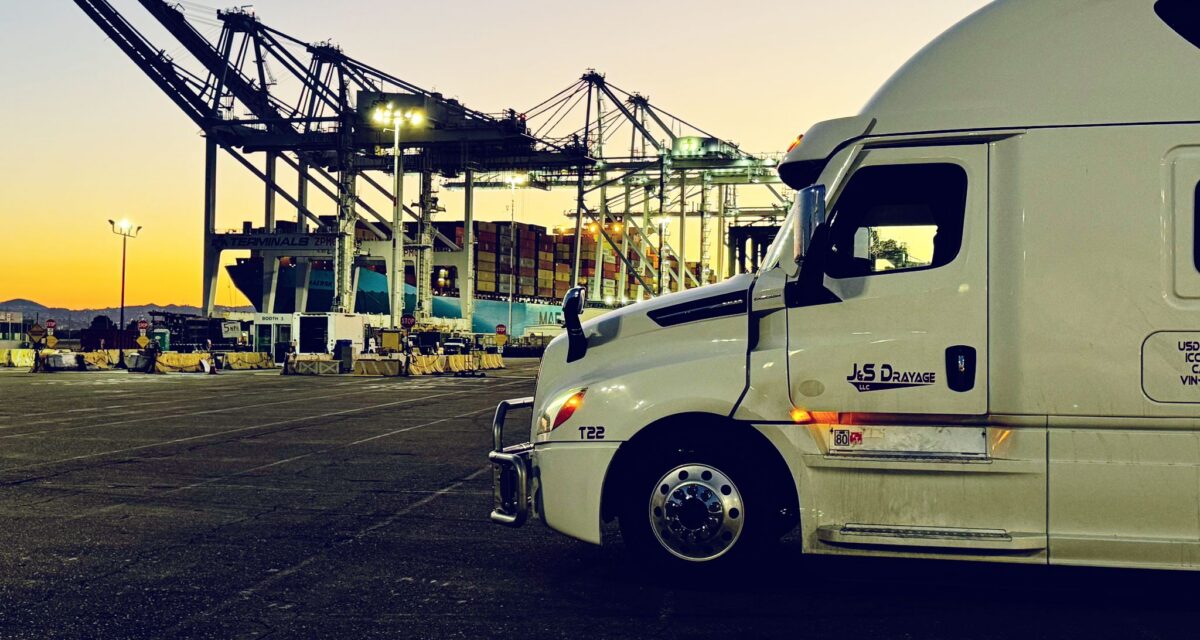
If your shipping strategy for moving ocean containers inland involves keeping the cargo sealed in its original international container all the way to its destination, you might be leaking money without realizing it.
When freight lands at the Port of Dallas or Oakland, the clock starts ticking. For many shippers and brokers, the instinct is to secure longhaul drayage and pull that heavy marine container straight across the country. However, failing to utilize smart transloading services at the coast can quietly erode your logistics profit margins.
The Reality of Container Math
International ocean shipping relies on standard 40-foot containers. Domestic over-the-road transport, on the other hand, runs on 53-foot dryvan trailers. Keeping your freight in that 40-foot ocean box for an over-the-road move means you are essentially paying to transport empty space.
Consider the mathematical breakdown: A standard 40-foot ocean container holds roughly 3,000 cubic feet of cargo, while a domestic 53-foot dryvan accommodates up to 4,300 cubic feet. Both vehicles have similar legal weight caps, hovering between 44,000 and 45,000 pounds.
The math is simple: Three 40-foot ocean containers match the volume of roughly two 53-foot dryvans. By routing cargo through a specialized transloading facility near the port, workers can unload, palletize, and condense three ocean containers into just two domestic trucks. Eliminating an entire longhaul truckload instantly scales down your overall logistics cost-to-serve.
Three Ways Inefficient Processes Drain Your Budget
If your supply chain lacks coordination between drayage, cross-docking, and warehousing partners, you will likely encounter these three hidden costs:
- Excessively High Per Diem and Chassis Fees: Ocean carriers expect their equipment back quickly. If an ocean container travels from the Port of Houston to a warehouse deep in Texas or out of state, the daily rental fees for the container and the chassis stack up fast.
- The Floor-Loaded Labor Squeeze: A large portion of import cargo arrives floor-loaded, meaning it is stacked loose without pallets to maximize ocean space. Unloading these manually at an inland destination warehouse requires extensive time and labor. Shifting this task to a port-proximate facility allows cargo to be palletized immediately, optimizing your downstream warehouse fulfillment efficiency.
- Empty Backhaul Miles: Paying longhaul rates to move a marine container inland means you also pay to haul that empty container all the way back to the port depot. Domestic dryvans do not face this restriction, allowing for much more flexible and cost-effective return options.
Streamlining the Gate-to-Highway Flow
Optimizing this transition requires treating drayage and transloading as a single, fluid process rather than separate events. The timeline should flow seamlessly from container arrival at the port dock, to a short port drayage run to a local facility, through transloading, and straight out onto the inland highway in a 53-foot dryvan.
The most reliable way to mitigate these hidden expenses is to intercept containers within a 25-mile radius of the port terminal. At J&S Drayage, we coordinate port drayage directly with our cross-dock and warehousing footprint across California and Texas. Our teams pull the container, transfer the cargo safely into a 53-foot dryvan, and return the marine equipment to the terminal before storage fees can accumulate. This approach maintains high operational velocity and protects your margins from unnecessary logistics costs.